Writers create more than stories and characters. They create places, sometimes within the world of today or the past. There are also places, and whole worlds that never existed, except within the imagination.
I find the key to worldbuilding is how believable it feels. A good setting, however fantastical, must feel real to the writer and reader (with satire and comedy you can get away with this). A few times on the British sitcom Are You Being Served? when the characters would put on theatrical pageants, senior saleswoman Mrs. Slocombe was going to (or wanted to) play a character far younger than herself. Someone would remark that it was “make-believe” to which there were responses of “We’re going to have to stretch our imaginations” and (to Mrs. Slocombe’s chagrin) “Not to the point of incredibility.”
Many considerations are necessary. Every detail must harmonize with the story, style, and themes. Otherwise, that sense of reality will shatter. The reader will be left questioning why a certain little thing is the way it is rather than enjoying the story.
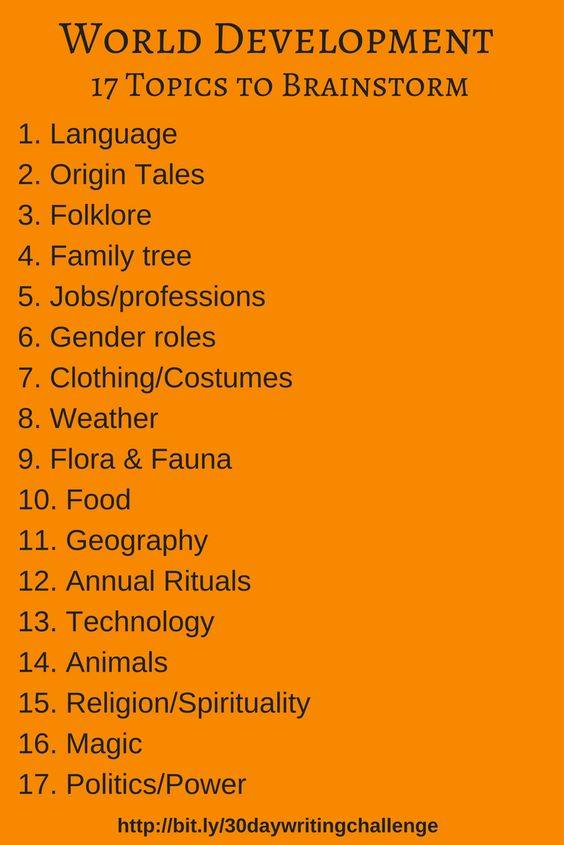
A contemporary setting, whether fictional or not, is usually pretty easy. With a historical backdrop, I recommend doing research into what life was like back then. Or perhaps the world is science-fiction, set several years in the future like Star Trek, or like Star Wars in a galaxy far, far away. There I suggest looking at the present, not just science and technology but the whole world. Imagine where it could all go in the future. Or it could be an alternate reality: what it would the world like had the past been different?
In fantasy, where the greatest amount of world-building undoubtedly occurs, I find it best to begin by looking at history, or even mythology. Suppose your world could have existed. Where and when would it be? Perhaps there’s more than one possibility. If so, perhaps you can merge them. J. R. R. Tolkien drew on myth, religion, and his own life experiences, from childhood and World War I, to create his stories.
Early on I envisioned my story as an epic adventure that would’ve taken place long, long ago. As a child I’d always been fascinated with knights. So I researched medieval life and society. However when it came to symbolism, names, and other details, initially I didn’t pay as much attention. It was a mix from various sources.
With new drafts of course came changes and the need to make everything fit together. As I mentioned before, I renamed characters, places, and things to strengthen my story’s feeling of “Gaelicness” which came out of a lifelong love for nature. I added details and symbols inspired by Ancient Celtic life and Irish myth. But I was careful not to take them too far, so they didn’t feel out of place with what I already had. I looked again to history and symbolism to help refine the “map” of my world. It is at present no longer a purely medieval setting but a mixture of different periods, which thereby makes it more its own unique world.
When it came to magic, rituals, and beliefs, I looked at myth and folklore, as well as numerous books and articles on Wicca, Neopaganism, Neo-Druidism, natural magic and spirituality. This research helped me reinforce the atmosphere I wanted. I’ve found that bridging ideas and sentiments from the modern world with ones from the old helps readers connect with themselves more.
When it came to the environment, I ultimately looked to the flora and fauna of Ireland and Britain. Brian Jacques, the late author of the Redwall saga, once said that he chose creatures native to his homeland for his anthropomorphic characters, rather than trying to use every animal in the zoo. I considered the latter once, until I realized many would never survive outside of a habitat not their own, and it would be too crowded. One or two exceptions won’t hurt. Still, they shouldn’t be too out of place. Herbs were researched for medicinal purposes. Some were later discarded as they were either not native to those lands or not found in a temperate climate. Many trees were chosen for being sacred to the Celts.
In addition to real creatures, I tried cramming in mythical ones too. Earlier drafts of my book included gryphons, unicorns, dragons, elves, dwarves and centaurs. The latter three were dropped as it again was a problem of overcrowding. With too many details, places and characters, a story becomes lost in itself. As a writer, you have to know when to stop.
If you write a series of books with an imaginary setting, I strongly advise you do NOT map out the entire world at the very beginning. Otherwise, you’ll be trapping your story (and yourself) in a box from which if you try to expand out of could lead to contradiction or dead ends. Without a complete box/map, you can add newer details with much more freedom. I found it very relieving, as I was able to concentrate more on my plot. Thus, the world and characters could grow in conjunction with it.
I will continue to build this fantasy world I’ve created as the trilogy progresses. Other, completely different worlds will no doubt follow with future projects. As in all aspects of writing, worldbuilding is undertaken with trial, error, patience, passion, and dedication. It is all part of a writer’s evolution.



Leave a reply to Herbs in Mystical Greenwood | Andrew McDowell Cancel reply