Check out my latest guest appearance, where I discuss the origins of what first inspired me to become a writer! Many thanks to my friend Gabriela, who blogs at shortprose.blog, for this wonderful opportunity!
Category: Marketing
-
Thank You
To all those who’ve purchased, read, and reviewed Mystical Greenwood, I want to say thank you. Thank you for your support and encouragement. It was recently announced as a finalist in the Epic/High Fantasy Category of the 2019 American Fiction Awards, sponsored by American Book Fest.
If you haven’t yet, I hope you’ll consider reading my book and posting a review. Every review helps spread the word. I will be very grateful if you do.
It is available in Paperback, Kindle, and Nook:
Be sure to add it to your Goodreads to-read list! The cover art is also available at Deviant Art. If you’re a fan, you can show it through your memorabilia!
Be sure to check out my publications in poetry and creative nonfiction as well!
Don’t forget to subscribe to receive notifications of new blog posts! You can also follow me on social media:
-
Herbs in Mystical Greenwood
April showers bring May flowers. So this month I thought I’d talk about the herbs that appear in Mystical Greenwood.
Wortcunning is a real term that I found in my research. I liked it and chose to use it in the book. The herbs Saershe employs for medicinal purposes were likewise inspired by real herbs and the treatments for which they were used.
Here they are:
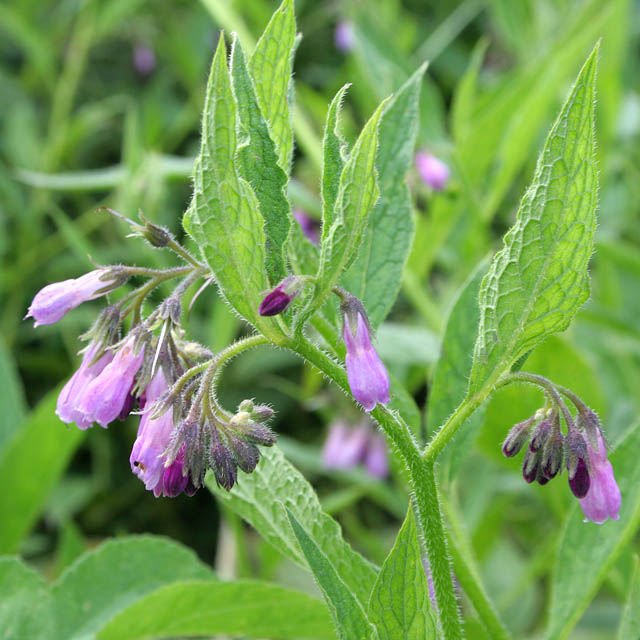
Blackwort/Knitbone (Comfrey) 
Rosin Rose (St. John’s Wort) 
Red Clover 
Wild Mint 
Thousand-leaf flower/Soldier’s woundwort (Yarrow) *Photos from Wikimedia Commons.
I’ve discussed before how fantasy can often be rooted in reality, especially when it comes to world-building. Originally when I was conducting research on herbs and plants for medicinal purposes, I chose herbs primarily for their purposes and didn’t give too much initial thought to where they came from. Eventually though I decided I wanted them to all have a generally similar place of origin to make the sense of reality stronger (similar to how I chose trees sacred to the ancient Celts), so some were discarded, and new ones came in, specifically Comfrey and St. John’s Wort. Yarrow, wild mint, and red clover were there from the beginning, and I’d decided were able to be kept.
Some are referred to by their proper names in the novel. Others are instead referred to by alternate names (which are given for those who haven’t yet read the novel). I didn’t set out to use those alternate names; I found them when I was reading about those herbs. I chose to use the alternate names because I felt their proper names sounded too modern and would not fit in a fantasy world (similar you might say to how dinosaur species in the Land Before Time films were referred to by names such as “Longneck” and “Sharptooth”).
Their healing abilities may be exaggerated for the purposes of storytelling, as Saershe also uses magic when employing them (it is a work of fiction after all), but I did try to make sure their purposes would be mostly authentic, and so the story did not stray out of that feeling of reality.
Don’t forget to order your copy of Mystical Greenwood!
Amazon | Amazon UK | Amazon CA
Goodreads | Barnes & Noble | Foyles
If you enjoy the book, PLEASE post a nice review and spread the word! And if you’re a fan, order your merchandise on Deviant Art!
Further Reading
-
Interview with author Andrew McDowell
This is my second guest appearance on Ari Meghlen’s blog. Many thanks again to Ari for this opportunity, and if you’re a writer looking to do an interview, I highly recommend her site.
Author Ari Meghlen Official Website
Today I welcome back author and good friend of mine, Andrew McDowell who has shared his advice with us before. Today he agreed to do an author interview. Check out his answers below :)

View original post 883 more words
-
Looking Back on Summer
This summer has been eventful. In June I appeared on the ArtistFirst Radio Network, which is highly supportive of independent authors:
Not long after that, I went to a wonderful family reunion. I signed their copies of Mystical Greenwood, and they surprised me with a special cake! Here’s a picture of the cake, along with some pictures of relatives from later on with their copies:


Most recently I made an appearance at the Crofton Library, where I talked about how I came to be published, and featured a musical performance of the two songs in Mystical Greenwood by their composer, Lee J. Chapman, and his associates:
Be sure to check my Events page for upcoming appearances in autumn and winter!
Don’t forget to purchase your copy of Mystical Greenwood! Post a review when you’re done! Every review helps! Please spread the word! Recommend it to your local bookstore and/or library! It is available from the following sites:
Goodreads | Barnes & Noble | Foyles
In addition, you can purchase mugs, greeting cards, postcards, magnets, mouse pads, and coasters featuring the cover art, as well as prints, on Deviant Art! If you’re a fan, show it!
Don’t forget to subscribe to receive new blog posts. Check out my Blog page to catch up on old ones! Be sure to visit me on social media too:
 Andrew McDowell