Check out my guest appearance with the amazing author Ally Aldridge! On her blog, I discuss Banned Books Week (which is going to be September 22-28 this year) and the importance of creative and intellectual freedom for writers, librarians, and humanity. We have a few months to go, but there’s no harm in thinking about it early! Thank you, Ally, for this opportunity!
Tag: Publications
-
Herbs in Mystical Greenwood
April showers bring May flowers. So this month I thought I’d talk about the herbs that appear in Mystical Greenwood.
Wortcunning is a real term that I found in my research. I liked it and chose to use it in the book. The herbs Saershe employs for medicinal purposes were likewise inspired by real herbs and the treatments for which they were used.
Here they are:
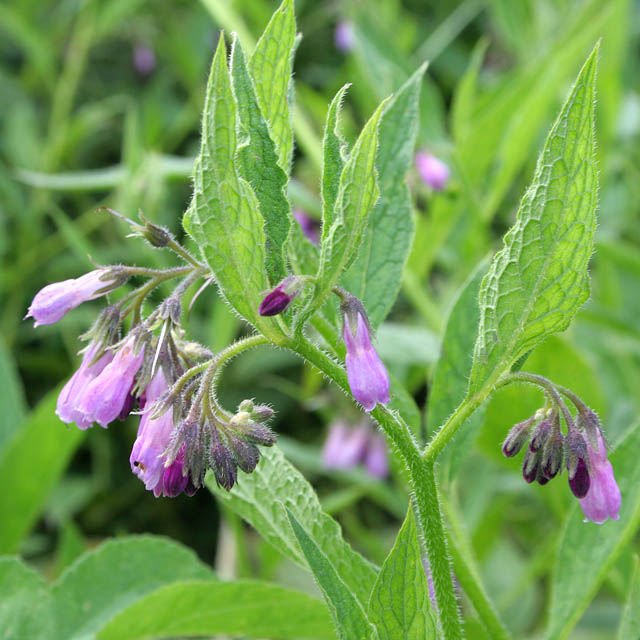
Blackwort/Knitbone (Comfrey) 
Rosin Rose (St. John’s Wort) 
Red Clover 
Wild Mint 
Thousand-leaf flower/Soldier’s woundwort (Yarrow) *Photos from Wikimedia Commons.
I’ve discussed before how fantasy can often be rooted in reality, especially when it comes to world-building. Originally when I was conducting research on herbs and plants for medicinal purposes, I chose herbs primarily for their purposes and didn’t give too much initial thought to where they came from. Eventually though I decided I wanted them to all have a generally similar place of origin to make the sense of reality stronger (similar to how I chose trees sacred to the ancient Celts), so some were discarded, and new ones came in, specifically Comfrey and St. John’s Wort. Yarrow, wild mint, and red clover were there from the beginning, and I’d decided were able to be kept.
Some are referred to by their proper names in the novel. Others are instead referred to by alternate names (which are given for those who haven’t yet read the novel). I didn’t set out to use those alternate names; I found them when I was reading about those herbs. I chose to use the alternate names because I felt their proper names sounded too modern and would not fit in a fantasy world (similar you might say to how dinosaur species in the Land Before Time films were referred to by names such as “Longneck” and “Sharptooth”).
Their healing abilities may be exaggerated for the purposes of storytelling, as Saershe also uses magic when employing them (it is a work of fiction after all), but I did try to make sure their purposes would be mostly authentic, and so the story did not stray out of that feeling of reality.
Don’t forget to order your copy of Mystical Greenwood!
Amazon | Amazon UK | Amazon CA
Goodreads | Barnes & Noble | Foyles
If you enjoy the book, PLEASE post a nice review and spread the word! And if you’re a fan, order your merchandise on Deviant Art!
Further Reading
-
Life imitating Art
Some say life can imitate art or be inspired by it. With Mystical Greenwood, I certainly drew on my love of wild animals and Nature, which in turn has grown and changed as a result of writing that book.
Growing up, I loved reading about animals and watching television shows about them. I was fascinated to learn new things about animals, and to see them in zoos and aquariums. While reading about animals, I also read about climates and ecosystems. I learned how animals, trees, and plants are interconnected with one another, and with the Earth. Eventually I decided that love for Nature would be the story’s heart. In conducting research into natural magic, Nature-based faiths, and spiritualism, the spiritual and sacred essence of that connection fit in well with that love of Nature.
In writing Mystical Greenwood, I’ve come to view the natural world in a different way. I respect nature more than I feel I ever did as a child. Green became my favorite color, and that hasn’t changed since. My research advocated communication and interaction with Nature. I now speak to many different creatures, even insects. I find I don’t freak out upon seeing some of them as much as I did when I was younger. I’ve learned to stand still and not give them reason to fear me, as many creatures may try to defend themselves from people if they feel threatened. When I’ve gone walking or jogging, I look more closely at the trees, and I feel a sense of happiness and peace when I see green leaves in spring and summer. Autumn and winter have their magical charm too.
At St. Mary’s College, I was able to continue connecting with Nature. It’s a beautiful campus, and I remember walking by the St. Mary’s River many times. I would sit on benches in the church cemetery and look out at the water. Other times I’d go down and sit by the water. I tried a technique my characters did by sitting and meditating, which I’d learned through my research is called grounding. Although I didn’t sit up against a tree like Dermot and his friends, I listened to the water and felt the warmth of the sun. A few times I can remember hearing birds come close to me, and I did my best not to alarm them by remaining calm. I looked very closely at the river and into the water. It was never a blank stare. I felt a connection, and serenity.


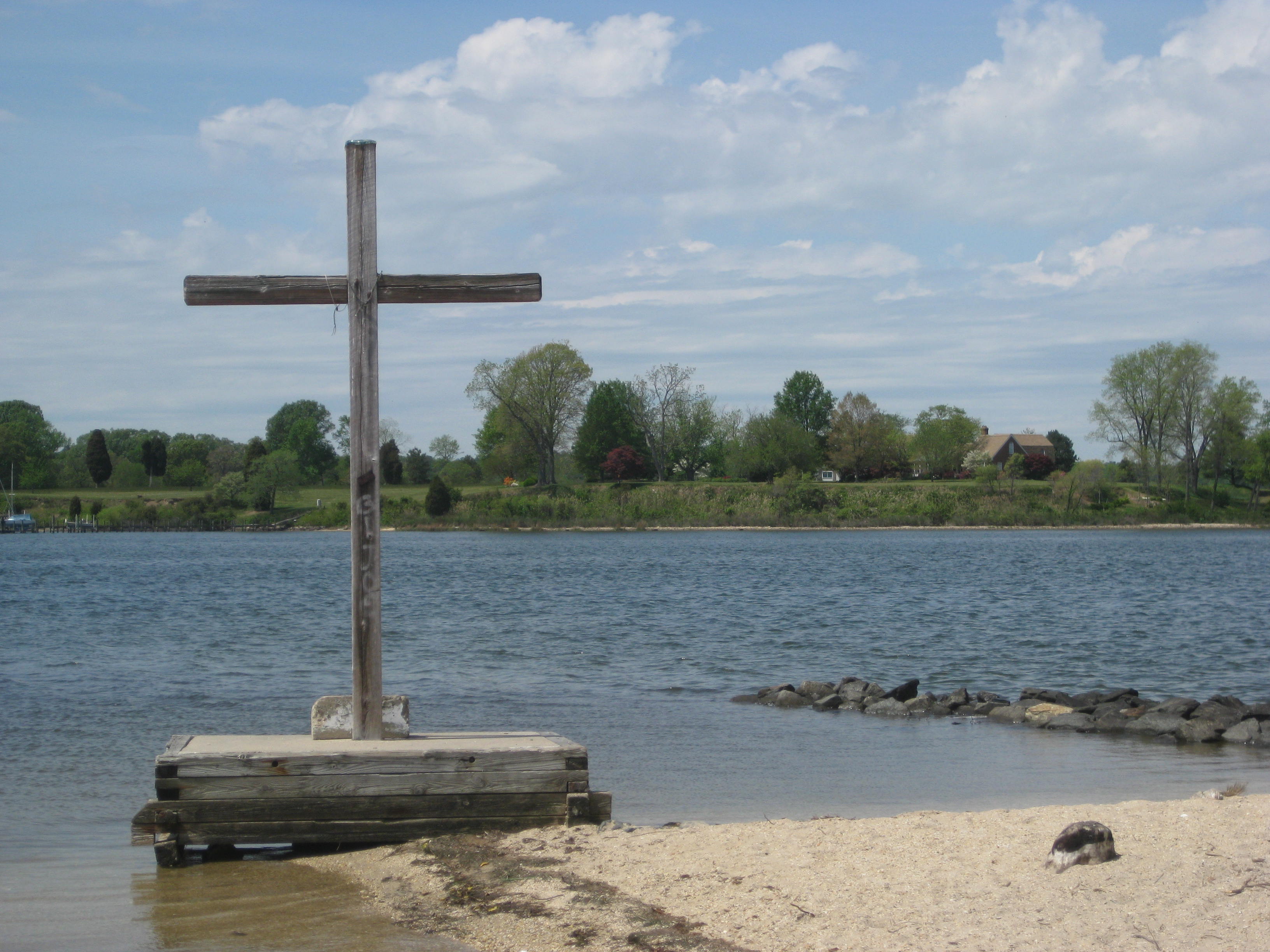
I don’t necessarily share the beliefs of those who follow Nature-based religions today, but I do respect them, and in my own way I get a sense of the Divine in the natural world. I’m glad of the effect Mystical Greenwood has had on my outlook and love for Nature, and I’m sure it will continue to strengthen with the sequels.
I had a great time at the Maryland Writers’ Conference last week. I sold six copies of Mystical Greenwood! Don’t forget to order yours!
Amazon | Amazon UK | Amazon CA
Goodreads | Barnes & Noble | Foyles
I hope you enjoy the book. PLEASE post a review and spread the word! And order your merchandise on Deviant Art!
Don’t forget to follow me on social media as well!
-
Inscribed #3
The collection grows.


I purchased a copy of Michael Hauge‘s Writing Screenplays that Sell a long time ago, and I read it in time for him to inscribe it at the 2018 Maryland Writers’ Conference, where he was a guest speaker. His book is on my list of recommended readings for authors.


I first met Rafael Alvarez at another Maryland Writers’ Conference years earlier, and I received an inscribed copy of Hometown Boy during a talk he did at the Linthicum Community Library.


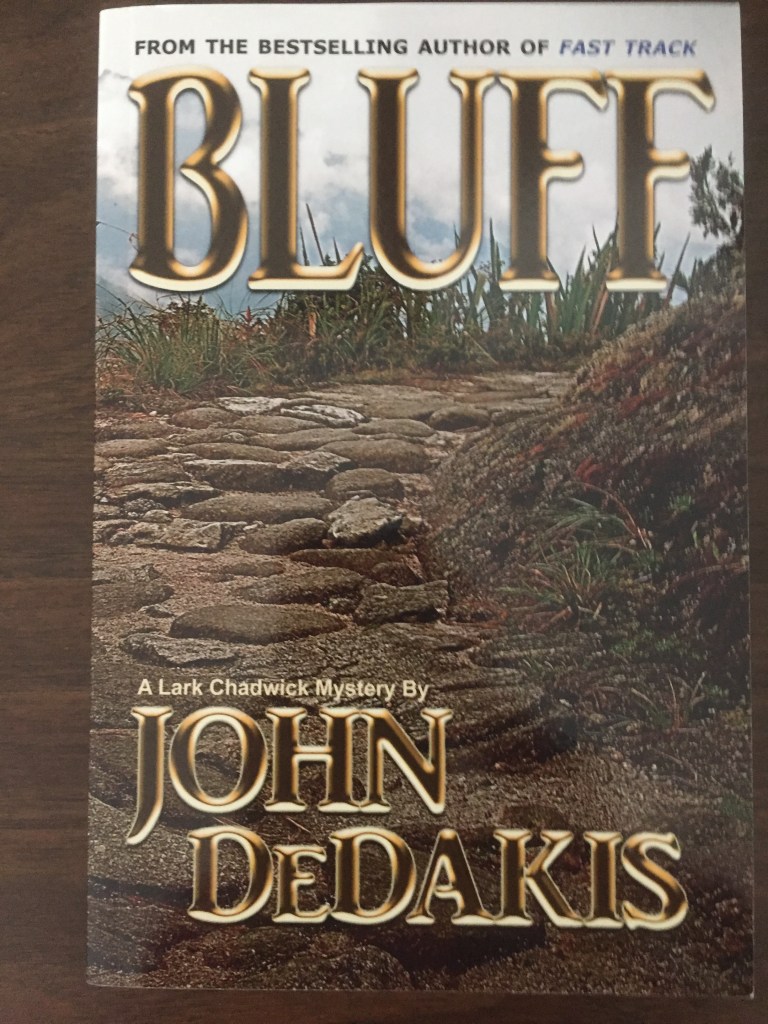
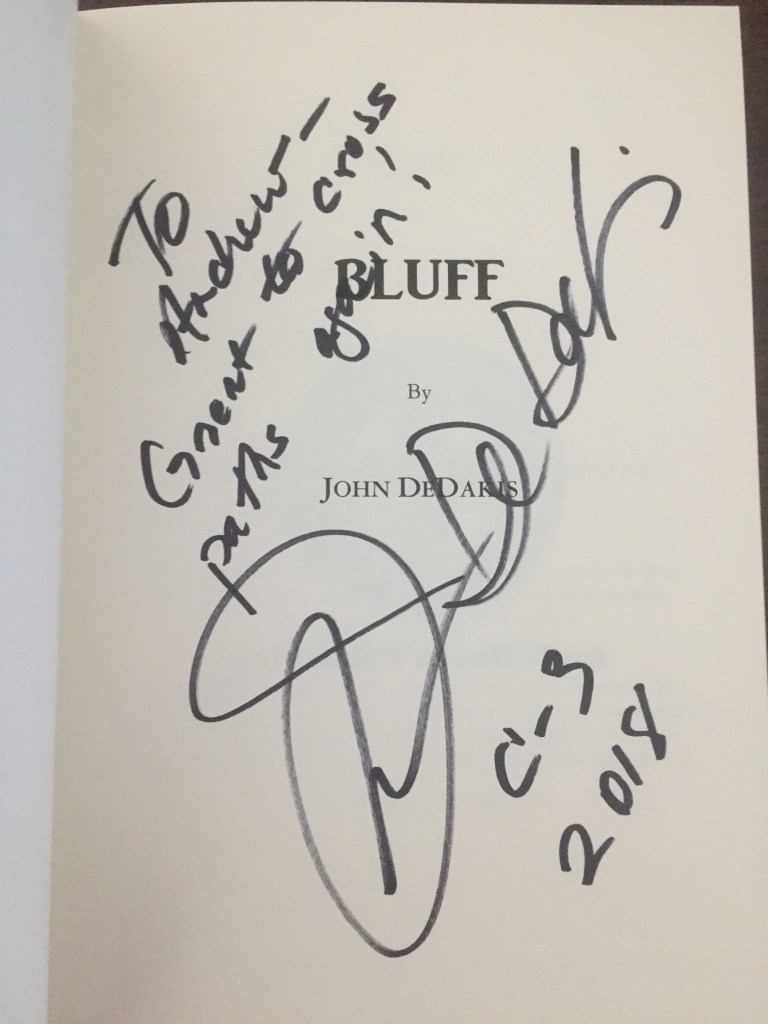
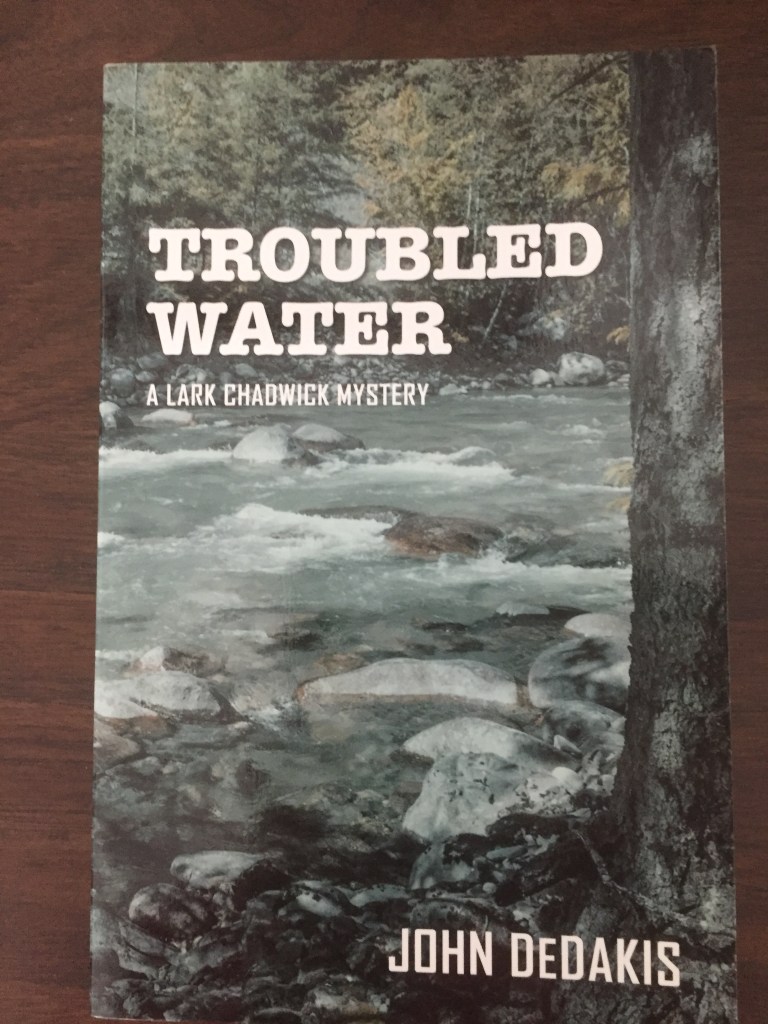

John DeDakis signed my copies of Fast Track, Bluff, and Troubled Water at the 2018 C3 Convention. I first met him when he spoke at a meeting of the Annapolis Chapter of the MWA, and he later provided an extremely helpful critique when I was editing Mystical Greenwood.


Last week at the MWA in Annapolis, Susan Moger was the guest speaker, and she signed my copy of her novel Of Better Blood.
Don’t forget to check out the rest of the collection, especially if you’re looking for some titles to add to your own to-read list:
I look forward to signing copies of Mystical Greenwood at the conference this weekend!
-
The Importance of Names (Video)
Watch my talk on the importance of names for characters, settings, and things at the Annapolis Chapter of the MWA if you haven’t yet:
This was my first talk geared specifically towards writers. I had a wonderful turnout that evening, and I’ve been informed that some of those who attended used what they learned in their own writing.
Here’s the handout from the event:
Do elements of my talk sound familiar? Read these old blog posts from which it draws upon:
Many thanks to all of you who purchased Mystical Greenwood! If you haven’t yet, please do so! Plus, it’s now available in Nook! Remember, books make great gifts! If you enjoy it, and I hope you do, please post a review! Help spread the word!
Goodreads | Barnes & Noble | Foyles
And order your merchandise on Deviant Art!
-
Looking Back on Summer
This summer has been eventful. In June I appeared on the ArtistFirst Radio Network, which is highly supportive of independent authors:
Not long after that, I went to a wonderful family reunion. I signed their copies of Mystical Greenwood, and they surprised me with a special cake! Here’s a picture of the cake, along with some pictures of relatives from later on with their copies:


Most recently I made an appearance at the Crofton Library, where I talked about how I came to be published, and featured a musical performance of the two songs in Mystical Greenwood by their composer, Lee J. Chapman, and his associates:
Be sure to check my Events page for upcoming appearances in autumn and winter!
Don’t forget to purchase your copy of Mystical Greenwood! Post a review when you’re done! Every review helps! Please spread the word! Recommend it to your local bookstore and/or library! It is available from the following sites:
Goodreads | Barnes & Noble | Foyles
In addition, you can purchase mugs, greeting cards, postcards, magnets, mouse pads, and coasters featuring the cover art, as well as prints, on Deviant Art! If you’re a fan, show it!
Don’t forget to subscribe to receive new blog posts. Check out my Blog page to catch up on old ones! Be sure to visit me on social media too:
-
Questions of Narrative and Tense
One has a story in mind and wants to tell it well. It then becomes a question of how you want to tell it. I’ve learned there’s more than one way to write a novel. In fact there are many, and like all details run the risk of being overthought or overdone. Sometimes one can get so worried about them it leads to writer’s block and one cannot move forward, sort of like when choosing a book title or character name. These are among the first details to choose at the beginning. Yet at other times, they seem to manifest themselves and/or change in the process.
One of the first questions that comes to mind is whether to write in first person or third. I find it often depends on the type of story being told. When writing Mystical Greenwood, I chose to write in third person as I felt it was the right way to tell a fantasy story set in an imaginary world no reader would have personally lived in, but could still observe and imagine. But there are many subdivisions of third person, and that was not so easily defined for me.
I flirted between third person limited and subjective. Subjective is trying to convey more than one character’s thoughts and feelings at the same time, whereas limited focuses on chiefly one character. After sending Mystical Greenwood to Mockingbird Lane Press, at my editor’s request I made it third person limited throughout because there were originally some scenes with slight POV shifts that caused confusion. While some chapters and scenes are told from the perspective of characters other than Dermot, and there are scene breaks and a change to another character’s POV in others, I still tried to limit it to one character at a time.
I could’ve written in third person objective, but that would’ve left out every character’s feelings and thoughts, which I felt could detach readers from the narrative. Third person omniscient is often used for high and epic fantasy, where all character’s thoughts and feelings are presented. That can sometimes make it hard for readers to attach themselves to the story, as there would be too many characters to choose from to bond with while reading. But that certainly doesn’t mean it can’t work.
I’m presently trying I-narrative with the neglected pets story. I feel first person works best with realistic fiction (as it’s a setting readers and writers live in and understand), mysteries, and thrillers. I would like to try an epistolary format (telling a story in the form of diary entries and letters), perhaps for historical fiction. Some authors have alternated between third and first within the same book (using the latter for their protagonist), which I might also try. News articles could also be used in epistolary stories, and be another way to alternate. Other writers have changed narrative within a series, like the late Stephen J. Cannell did with the Shane Scully books.
With first person, one can also make it plural or use an unreliable narrator. Some novels try to replicate the thought-process, or stream of conscious; there third or first could work, but I personally find it hard to follow. Some classic books have had chapters or scenes written in the format of plays; another thing I could try.
I should also mention second person narrative: “You”. It’s rarer in literature, as is writing in future tense. Most stories are in past tense, but some have been written in present, just like plays and screenplays. But there have been some well-told stories written using one or both, most famously perhaps Oh, the Places You’ll Go! by Dr. Seuss. It’s always good to experiment and try new things with writing. Writer should use whatever they feel is best for your story.
Further Reading
- Writing in Third Person Omniscient vs Third Person Limited.
- Aldridge, Ally. Point of View.
- Wolf, Kalesjha H. First Person vs. Third Person.
 Andrew McDowell