To all those who’ve purchased, read, and reviewed Mystical Greenwood, I want to say thank you. Thank you for your support and encouragement. It was recently announced as a finalist in the Epic/High Fantasy Category of the 2019 American Fiction Awards, sponsored by American Book Fest.
If you haven’t yet, I hope you’ll consider reading my book and posting a review. Every review helps spread the word. I will be very grateful if you do.
Be sure to add it to your Goodreads to-read list! The cover art is also available at Deviant Art. If you’re a fan, you can show it through your memorabilia!
April showers bring May flowers. So this month I thought I’d talk about the herbs that appear in Mystical Greenwood.
Wortcunning is a real term that I found in my research. I liked it and chose to use it in the book. The herbs Saershe employs for medicinal purposes were likewise inspired by real herbs and the treatments for which they were used.
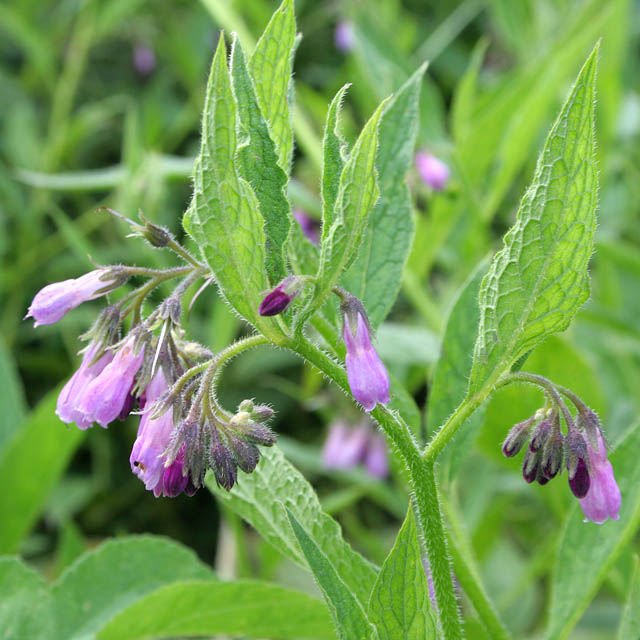
I’ve discussed before how fantasy can often be rooted in reality, especially when it comes to world-building. Originally when I was conducting research on herbs and plants for medicinal purposes, I chose herbs primarily for their purposes and didn’t give too much initial thought to where they came from. Eventually though I decided I wanted them to all have a generally similar place of origin to make the sense of reality stronger (similar to how I chose trees sacred to the ancient Celts), so some were discarded, and new ones came in, specifically Comfrey and St. John’s Wort. Yarrow, wild mint, and red clover were there from the beginning, and I’d decided were able to be kept.
Some are referred to by their proper names in the novel. Others are instead referred to by alternate names (which are given for those who haven’t yet read the novel). I didn’t set out to use those alternate names; I found them when I was reading about those herbs. I chose to use the alternate names because I felt their proper names sounded too modern and would not fit in a fantasy world (similar you might say to how dinosaur species in the Land Before Time films were referred to by names such as “Longneck” and “Sharptooth”).
Their healing abilities may be exaggerated for the purposes of storytelling, as Saershe also uses magic when employing them (it is a work of fiction after all), but I did try to make sure their purposes would be mostly authentic, and so the story did not stray out of that feeling of reality.
Don’t forget to order your copy of Mystical Greenwood!
Some say life can imitate art or be inspired by it. With Mystical Greenwood, I certainly drew on my love of wild animals and Nature, which in turn has grown and changed as a result of writing that book.
Growing up, I loved reading about animals and watching television shows about them. I was fascinated to learn new things about animals, and to see them in zoos and aquariums. While reading about animals, I also read about climates and ecosystems. I learned how animals, trees, and plants are interconnected with one another, and with the Earth. Eventually I decided that love for Nature would be the story’s heart. In conducting research into natural magic, Nature-based faiths, and spiritualism, the spiritual and sacred essence of that connection fit in well with that love of Nature.
In writing Mystical Greenwood, I’ve come to view the natural world in a different way. I respect nature more than I feel I ever did as a child. Green became my favorite color, and that hasn’t changed since. My research advocated communication and interaction with Nature. I now speak to many different creatures, even insects. I find I don’t freak out upon seeing some of them as much as I did when I was younger. I’ve learned to stand still and not give them reason to fear me, as many creatures may try to defend themselves from people if they feel threatened. When I’ve gone walking or jogging, I look more closely at the trees, and I feel a sense of happiness and peace when I see green leaves in spring and summer. Autumn and winter have their magical charm too.
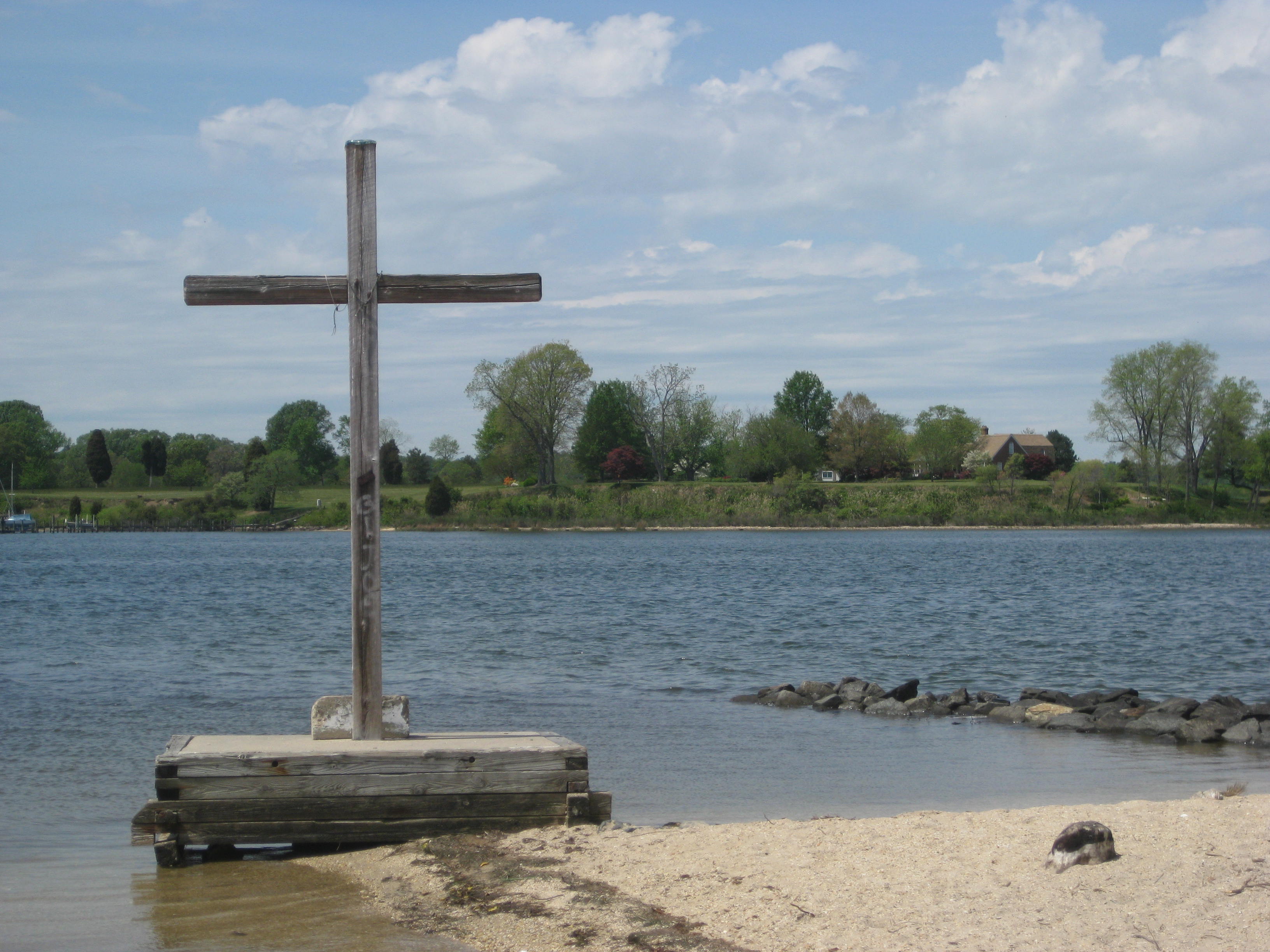
At St. Mary’s College, I was able to continue connecting with Nature. It’s a beautiful campus, and I remember walking by the St. Mary’s River many times. I would sit on benches in the church cemetery and look out at the water. Other times I’d go down and sit by the water. I tried a technique my characters did by sitting and meditating, which I’d learned through my research is called grounding. Although I didn’t sit up against a tree like Dermot and his friends, I listened to the water and felt the warmth of the sun. A few times I can remember hearing birds come close to me, and I did my best not to alarm them by remaining calm. I looked very closely at the river and into the water. It was never a blank stare. I felt a connection, and serenity.
I don’t necessarily share the beliefs of those who follow Nature-based religions today, but I do respect them, and in my own way I get a sense of the Divine in the natural world. I’m glad of the effect Mystical Greenwood has had on my outlook and love for Nature, and I’m sure it will continue to strengthen with the sequels.
I had a great time at the Maryland Writers’ Conference last week. I sold six copies of Mystical Greenwood! Don’t forget to order yours!
This is my second guest appearance on Ari Meghlen’s blog. Many thanks again to Ari for this opportunity, and if you’re a writer looking to do an interview, I highly recommend her site.
Today I welcome back author and good friend of mine, Andrew McDowell who has shared his advice with us before. Today he agreed to do an author interview. Check out his answers below :)
Check out my interview with the amazing author Vonnie Winslow Crist! Many thanks for this opportunity, Vonnie! Anyone who’s looking to do an author interview, I highly recommend her blog Whimsical Words!
Watch my talk on the importance of names for characters, settings, and things at the Annapolis Chapter of the MWA if you haven’t yet:
This was my first talk geared specifically towards writers. I had a wonderful turnout that evening, and I’ve been informed that some of those who attended used what they learned in their own writing.
Many thanks to all of you who purchased Mystical Greenwood! If you haven’t yet, please do so! Plus, it’s now available in Nook! Remember, books make great gifts! If you enjoy it, and I hope you do, please post a review! Help spread the word!
It’s National Author’s Day! I would like to take this opportunity to say thank you to many different writers I’ve met, and who’ve been encouraging to me on my author’s journey. Writing, despite what some (if there are any still) think, isn’t solitary. I started out on my own when I was a teenager, but I’ve come to see that authors get where they are with the help and support of others, especially fellow writers.
There are many more too, including those on my Amazing Authors Twitter List and those whose pages I follow via my Facebook page. Again, many thanks to all of you! I wish you the best of luck with your own writing endeavors! Same to you reading this, especially if you’re participating in NaNoWriMo!
I’m looking forward to my writer’s talk, which is now in two weeks! I’ll be discussing the importance of names for the Annapolis chapter of the MWA at the Maryland Hall for Creative Arts. Come on out if you’re in the area, especially if you’re a writer! I’ll also be participating in their Open Mic next month!
The holidays are around the corner, and books make great gifts! Please don’t forget to order your copy of my high fantasy novel, Mystical Greenwood:
If you enjoy the book, please post your review and help spread the word, especially on Amazon and Goodreads! Add it to your to-read list on the latter today!
Remember, the cover art is available also on Deviant Art in the form of prints, mugs, magnets, mouse pads, coasters, postcards, and greeting cards. Show you’re a fan!
Subscribe to receive notifications of new blog posts! Check out my Blog page to catch up on old ones! Be sure to visit and follow me on social media too:
My latest guest appearance on the blog of the amazing author Sharon Ledwith, where I discuss the importance of self-confidence for writers, and dealing with self-doubt:
Gryphons and dragons and unicorns, oh my! Yeah, I couldn’t resist. Mystical Greenwood features these three mythical creatures, as was revealed in the book trailer created by Mockingbird Lane Press. So, this month I thought I’d discuss their history a little, as well as the personal fascination that led me to include them in my story.
GRYPHONS
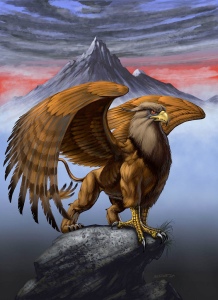
When it came to choosing the “main” mythical species for Mystical Greenwood, from the beginning I wanted one a little more unique than dragons or unicorns. I first truly became acquainted with gryphons while reading about them in the Harry Potter book Fantastic Beasts and Where to Find Them. There was something about them that struck a chord with me. I knew right away this was the creature I wanted for my story.
Gryphons represent courage, boldness, majesty, and nobility, and true love since they were said to mate for life, and only once. Their name can be spelled differently too, as I mentioned before when discussing names in general which is what led me to choose the spelling I did. I also read their nests were reputed to contain emeralds, which I felt would fit well with the “Gaelic” atmosphere I was striving for.
DRAGONS
When reading about knights in shining armor and dreaming of being one as a child, I read about dragons. There’s that common story line of a knight slaying one, like St. George. They’re undoubtedly the quintessential fantasy creature. Western dragons are often depicted greedily guarding treasure, like Smaug in The Hobbit or the dragon in Beowulf. They’ll embark on rampages when a single item is stolen from their hoard. They’re linked with power and magic, like the dragons of Daenerys Targaryen.
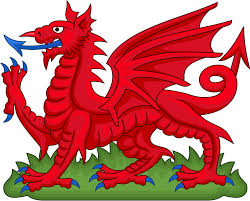
Dragons come in many colors, all of which can be interpreted symbolically. The fight between Wales and England has been embodied by red and white dragons (the colors of the same dragons a young Merlin realized were wrecking Vortigern’s castle from constantly battling in an underground pool). They can fly, breathe air or fire, dwell on land or in water. There are so many possibilities with dragons!
While living in Japan, I became acquainted with a dragon different from the Western one. The Eastern dragon is often wingless, benevolent, and worshiped. I once thought about having both in my story, but it would’ve been a world-building dilemma, so I didn’t (which is also why I used “feline” instead of “lion” for gryphons). Because of the Western dragon’s association with greed, those in Mystical Greenwood are villains. Nevertheless, maybe I can somehow introduce good dragons in the sequels. There’s also the possibility of sea dragons. Maybe I can combine the two. We’ll see.
UNICORNS
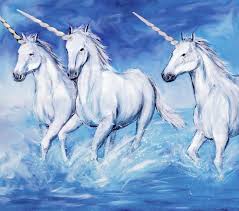
Unicorns represent purity and goodness. In the first Harry Potter novel, drinking their blood extends life, but that life becomes cursed for slaying such a pure creature. Their horns were said to be made of a substance called alicorn, which possessed healing capabilities. Narwhal tusks were once believed to be unicorn horns. Like dragons and gryphons, something about them draws me. Perhaps in my childhood fantasies about being a knight I dreamed of riding one (though whenever I imagined myself on an actual horse, it was white).
I’m considering introducing a few other mythical creatures in the sequels, but I am glad I chose these three for Mystical Greenwood. Please don’t forget to purchase your copy and post your review!




 Andrew McDowell