An author’s inscription makes your copy of their work unique to you. If you’re a writer yourself, you remember the story behind the inscription, and the connection made with your fellow writer.
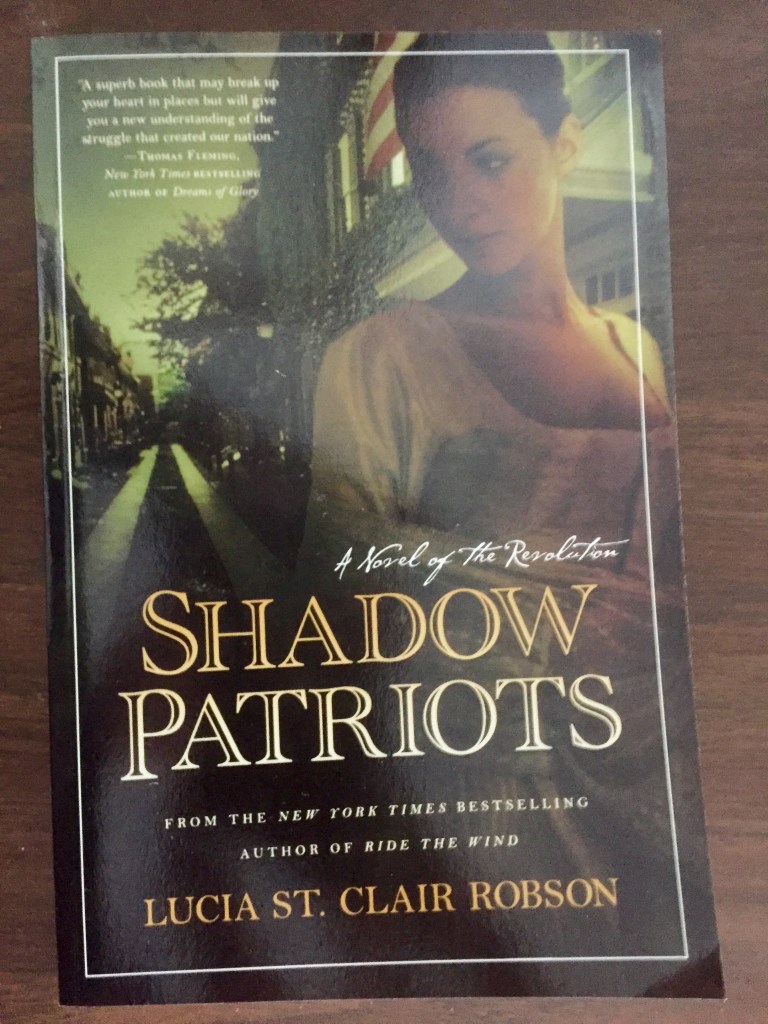
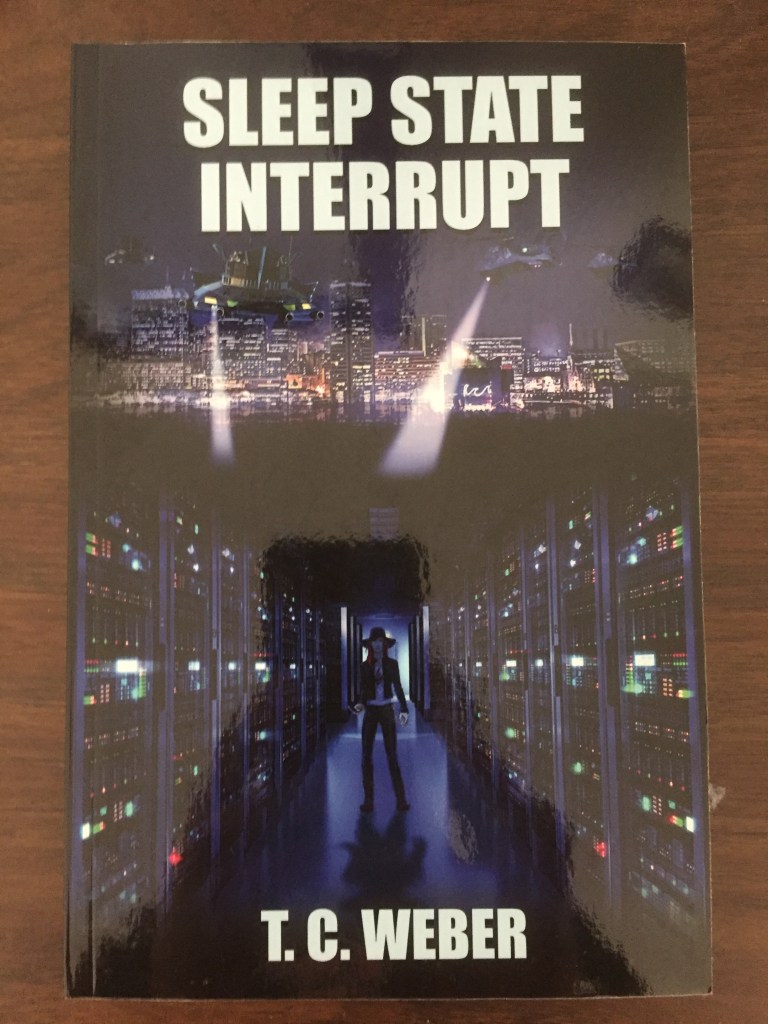
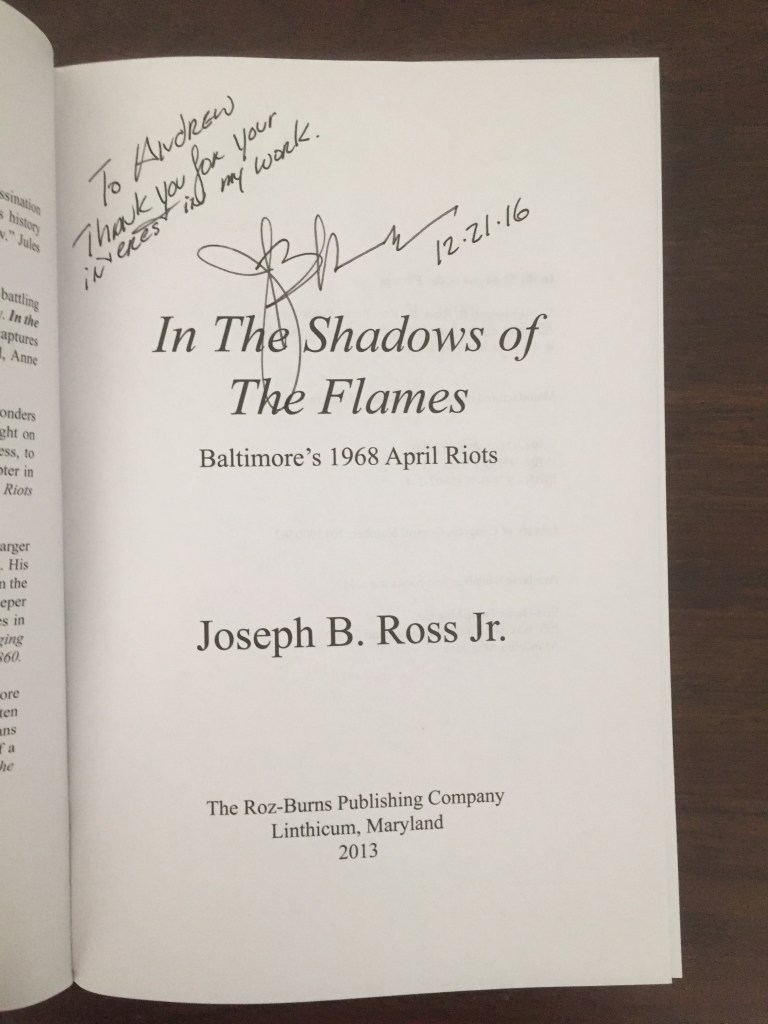
Here are seven inscribed books I own:
A Thousand Acres was inscribed during a weekend event for prospective students specifically interested in creative writing at Washington College, where Jane Smiley was the guest speaker.
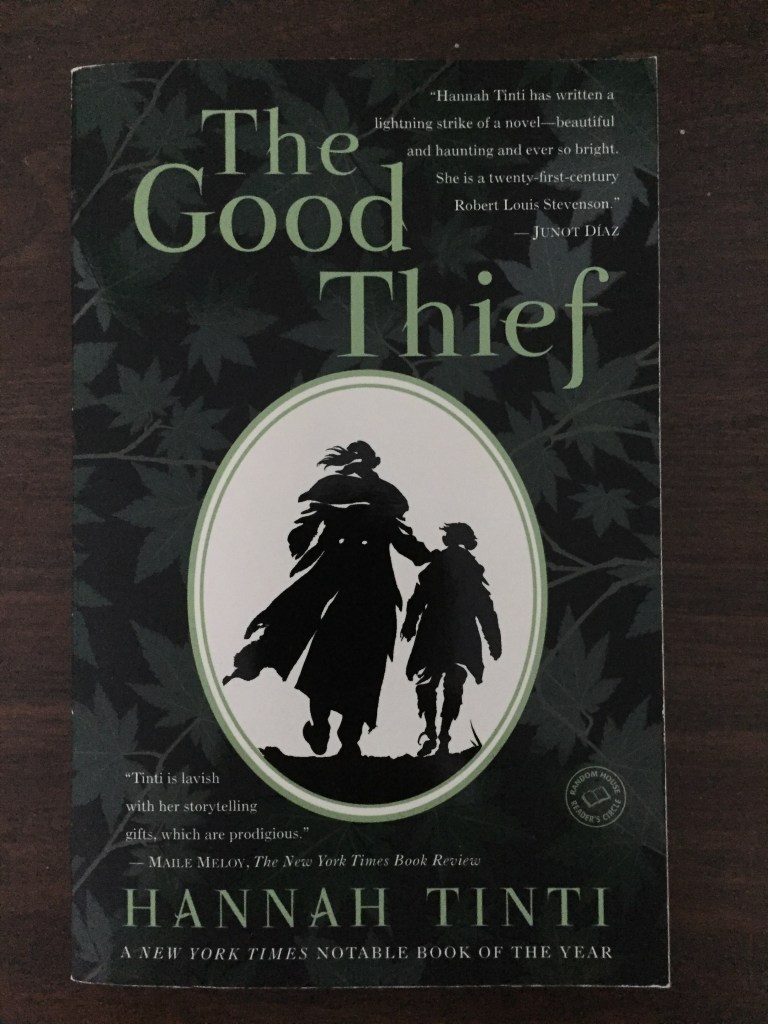
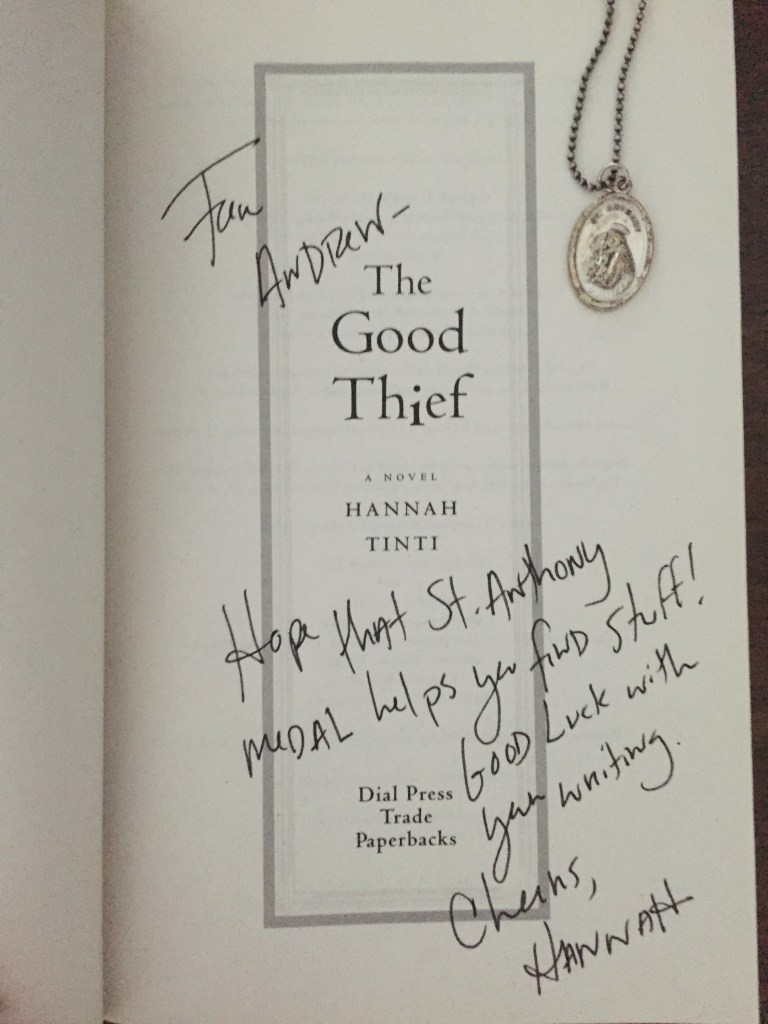
The Good Thief was inscribed at the very last VOICES author reading I attended at St. Mary’s College. I also received from Hannah Tinti during the subsequent Q&A a pendant of St. Anthony, the patron saint of lost things (which you can see in the slideshow’s fourth picture above), who features in the novel along with a “wishing stone” – a stone with a natural, unbroken ring of another color (another student before me received one).
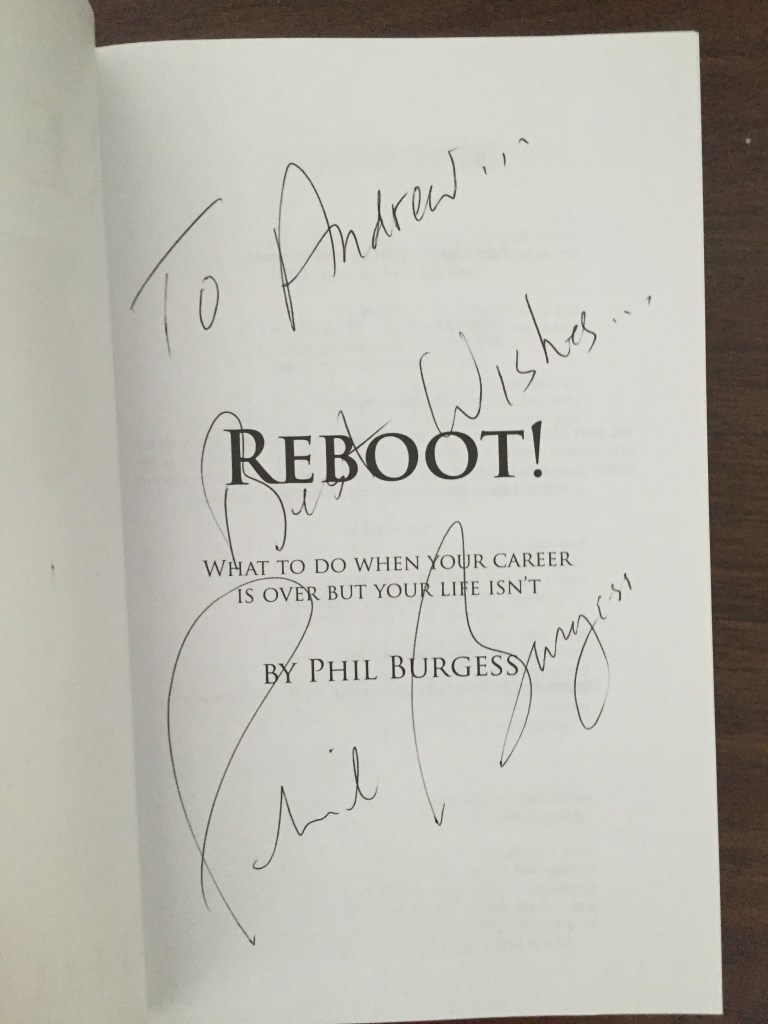
Reboot! and Beyond Blue were both inscribed during different meetings of the Annapolis chapter of the MWA, where Phil Burgess and Austin S. Camacho were the respective guest speakers.
The Last Government Girl was inscribed at the Baltimore Book Festival in September 2015. As I had won second place in the MWA Contest’s creative nonfiction category, Ellen Herbert won in the novel category.
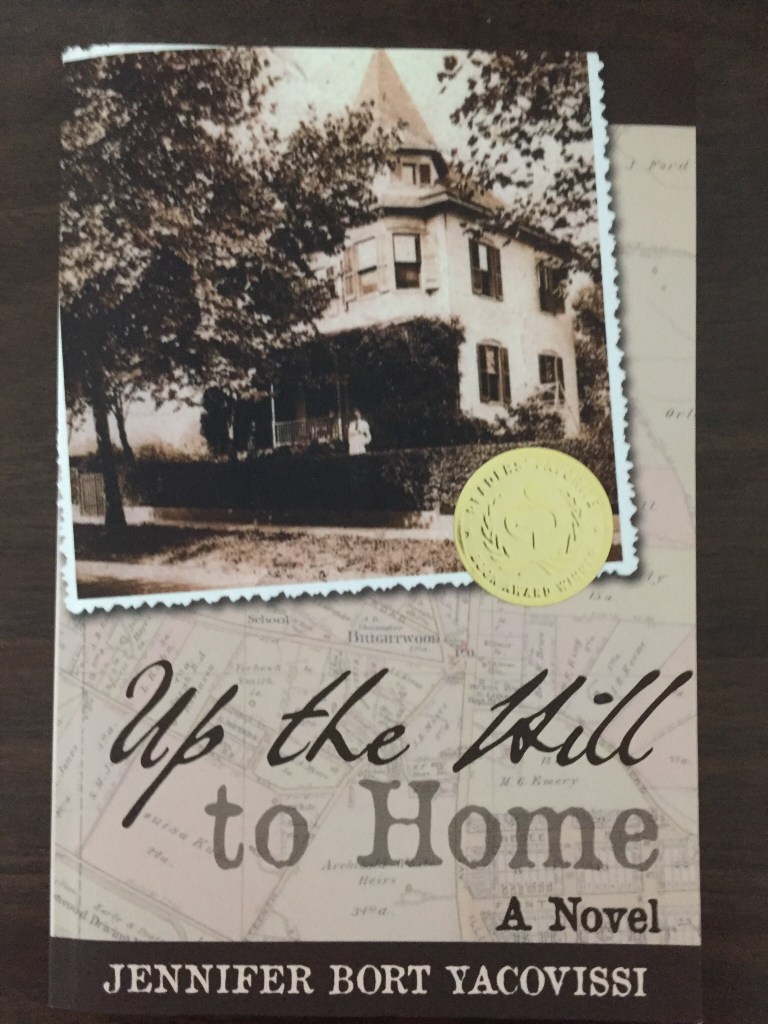
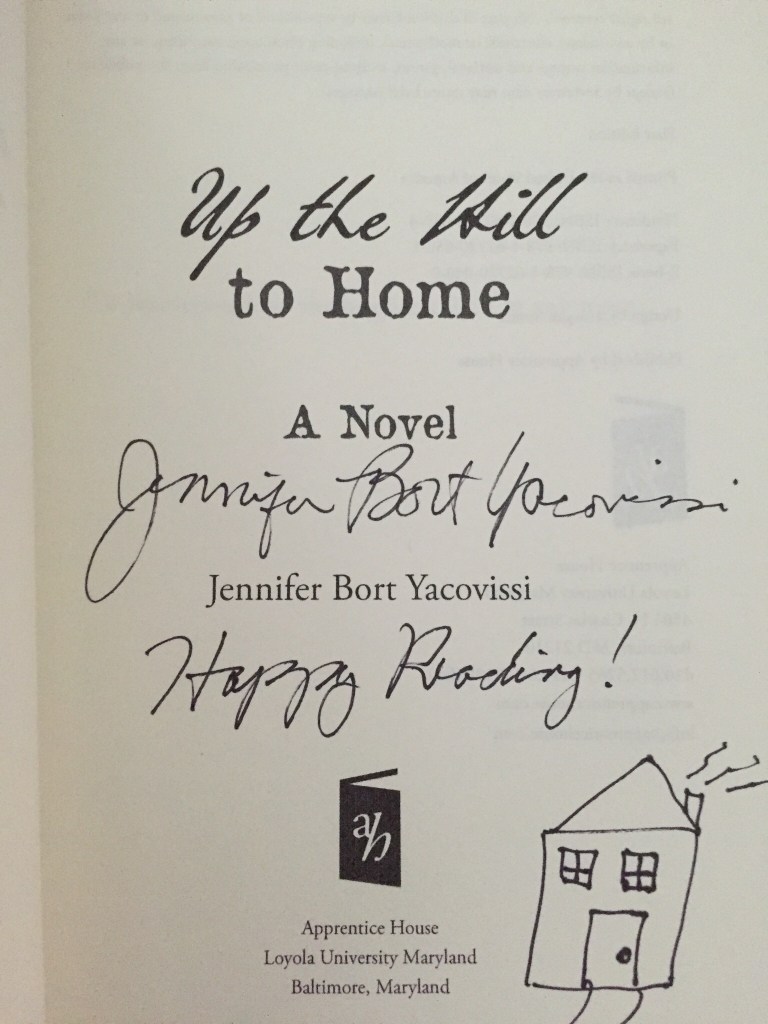
I purchased Up the Hill to Home at Barnes & Noble in Bowie. When I opened it, to my surprise it already bore Jennifer Bort Yacovissi‘s inscription!
In addition to these books, I have an inscribed short story, Gasoline, written by Jennifer Cognard-Black under the pseudonym J. Annie MacLeod. It was given to me as a gift at the end of my first semester at St. Mary’s:
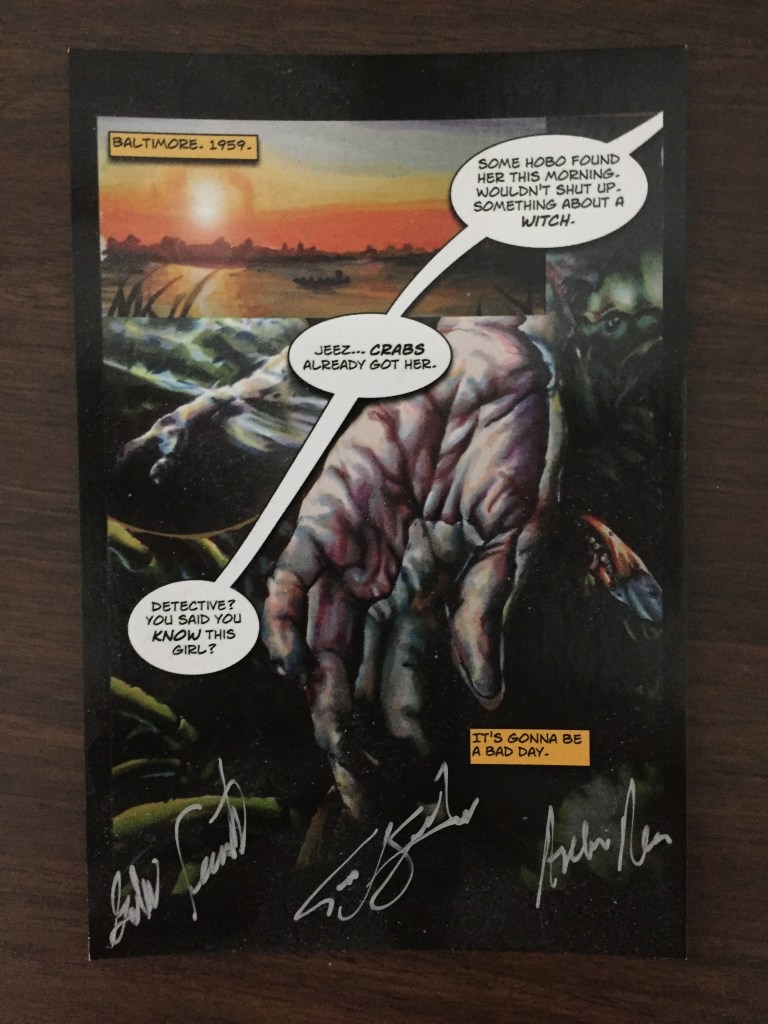
Finally, I have two promotional cards won in a drawing at another meeting of the Annapolis chapter of the MWA, where James L. Gossard talked about his graphic novel Mobtown. They bear his inscription along with those of his collaborators, Gabe Fremuth and Anthony Ness:
I remember inscribing the anthology which included my essay during the previously mentioned Baltimore Book Festival. Someday soon, with future novels, hopefully I will do for others as these authors did for me.
I’ve always been a fan of horror fiction, and every October I watch scary movies all month long. During my first semester at St. Mary’s College, I took a Freshman Seminar called Victorian Monsters and Modern Monstrosities. Professor Jennifer Cognard-Black introduced us (we came to be known as “Marvelous Monsters”) to six archetypes. With each we read a corresponding literary classic:
Freak – Frankenstein
Madwoman – Jane Eyre
Schizo – The Strange Case of Dr. Jekyll and Mr. Hyde
Horrorscape – Alice’s Adventures in Wonderland
Deviant – Dracula
Animagi – The Island of Dr. Moreau
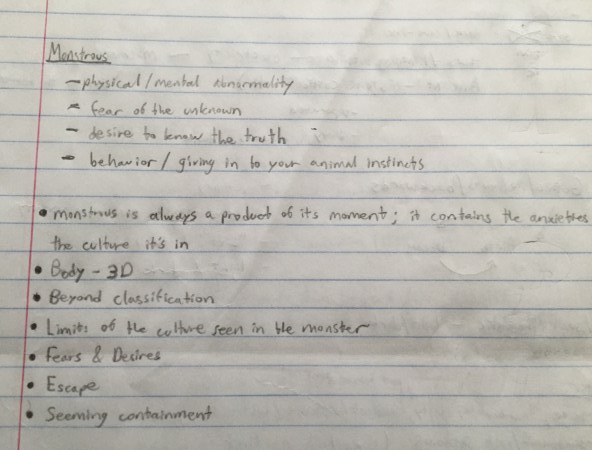
Here are some of my notes from the start of the seminar regarding core themes:
Indeed, these archetypes reflect Victorian social fears and limits. Yet there is something about what’s considered monstrous that draws people in. We delight in feeling terrified. We are interested in the unknown. During Victorian times revolutions were underway in science and philosophy. The establishment clashed with the Enlightenment.
The Freak is considered, as I wrote in my notebook, the “embodiment of cultural anxiety”. Freaks are the ultimate outsiders, who can never fit due to a social abnormality, physical or not. Dr. Frankenstein’s creation is a result of his desire to know higher truth. Yet, out of fear for what he achieved, he abandons his creation. The creature longs to be human. Born innocent, he teaches himself by observing them. Yet they ultimately reject him. Mary Shelley was shunned for being her eventual husband’s mistress while he was still married to his first wife. Shunned himself, Frankenstein’s creation becomes a raging and vengeful monster, but only because society made him one. He still has a heart and feels guilt.
The Deviant can infiltrate society and take it down from within, without guilt. Count Dracula moves to London and attacks young well-born women, who symbolize what is valued by Victorian society. After the character Lucy is vampirized, she attacks children, representative of society’s future. The vampire deviates from social norms through murder and raw sexuality (something Bram Stoker could only reference indirectly in his time), and operates secretively. Yet Dracula is from a different world than Victorian London. His is one of superstition, presenting a clash between Christian and non-Christian. Exotic landscapes and languages are seen as beautiful yet terrifying. Though Victorians saw themselves as cosmopolitan, they enjoyed expressing exotic tastes. Stoker merged old and new, drawing from folklore while using a contemporary setting.
Sometimes what is deviant to one culture is not to another. A Horrorscape can be seen as a Deviant story in reverse. After tumbling down the rabbit hole, Alice enters a world where everything that defined hers, her whole cultural upbringing, is turned upside down. Everyone’s mad. Alice tells the caterpillar she’s not herself. She cannot conform. She’s transgressive. Perhaps the inhabitants of Wonderland saw Alice as a Deviant trying to tear down their world.
The notion of giving in to one’s “animal” instincts is most clearly depicted in Animagi. They represent a move away from rational towards emotional, thus revealing the beast hidden within, which is violent and aggressive. Dr. Moreau’s creations blur the boundary between man and beast. Another famous example is the werewolf. Often those animals personifying evil are feared, exotic predators. Such instincts can be classified as Christian deadly sins: greed, gluttony, anger, and lust. Yet there is something appealing about giving in: a sense of freedom. H. G. Wells defied convention by advocating “free love,” and was notorious for his affairs.
The schizo is the ultimate human split between good and evil, yet it is often unclear which is the true personality. Though Jekyll’s desire to know the unknown results in a physical transformation (which is not required for schizos), it can exist solely within the mind), even if Hyde is guilty of crimes Jekyll would never commit, Hyde is still a part of him, and slowly takes over. It calls into question identity itself. Identity is in turn reflected in residency and possessions. Jekyll lives in a respectable, cosmopolitan neighborhood; Hyde’s is far less respectable. Once I watched a documentary discussing how Robert Louis Stevenson’s birthplace, Edinburgh, was a city divided between old and new, rich and poor, suggesting that duality may be what inspired his story.
Victorians had a dual perspective regarding women, at a time when many like Shelley’s mother began challenging the status quo and seeking rights in what was still a male-dominated world (a world in which Shelley published anonymously while Charlotte Brontë and her sisters used male pseudonyms). On one side was virginity, marriage and motherhood. On the other were Madwomen: temptresses, mistresses, witches – women who played upon men’s desires, using their femininity for selfish, nefarious purposes. The lunatic Bertha Mason prevents Jane Eyre from marrying Rochester because she’s his wife (though she would later be portrayed as a victim in Wide Sargasso Sea). She dominates Rochester through marriage. Madwomen seek power over men, and greater knowledge (tied back to Eve in Eden). Women were linked symbolically with Nature because of their ability to bear children. Sometimes madwomen were associated with water and drowning, though Bertha herself dies by fire.
People are inexplicably drawn to what terrifies them. These fears and anxieties live on today. There are still outsiders, some by choice and others who have none. Criminals deviate. We all struggle with primal urges and desires. Wherever there are rules, there are always rebels. Perhaps that is why we still enjoy horror fiction. That seminar was the highlight of my first semester. I loved it. Hopefully someday I’ll apply some of these themes to horror stories of my own.
The novel I’m trying to publish includes a prologue, which I recently read at an open mic. Prologues I’ve discovered are tricky. It would seem they are generally discouraged in publishing. However, I’ve seen books, including bestsellers, which have them. Even in movies you’ll find them. There are different kinds of prologues too. Lital Talmor has created lists of different categories, good and bad (see Further Reading below).
This particular prologue I have furiously tried to keep as many beta readers and fellow writers in critique groups (all of whom shall remain anonymous) gave their opinion of it and the rest of the manuscript. Why you might ask did I want to keep it so much? Was it even worth it?
I’ve learned if a prologue is going to be written, it must have a specific purpose. In order to draw readers in, the first few pages, with or without one, must hook them. If the prologue doesn’t do that, it ought to be discarded. At the beginning, what I wanted mine to do was show what is at the heart of the story, which is the beauty and importance of Nature. Throughout the manuscript and especially the prologue, when it came to Nature imagery, I got a bit poetic, which at the time was what I wanted.
One of my first beta readers liked it for the juxtaposition of Nature’s beauty with its destruction, which shows what is at stake. However, as I would later learn from other readers, that was not enough. In the earliest drafts of my novel, the entire prologue was a dream sequence. However, I soon learned that was a big no-no. Furthermore, it was, as Maeve Maddox (see Further Reading below) would point out, largely atmosphere. Lilley herself advises against such a prologue. Maddox says if your prologue feels “boring” then readers will want to go straight to Chapter 1. Those who read my earliest version felt it was too “detached” from the plot, and the style “wordy”. Clearly then if changes were not made it would have to go, or at least be broken up within the main plot somehow. Maddox herself offers that solution in the case of backstory.
So, in an attempt to keep my prologue, I made only the second half a dream sequence, with the protagonist describing it as he was looking back on past events. So I sort of made it a cross between what Talmor calls “background” prologue and a “future protagonist” one (the idea had come around because I have considered an epilogue at the end of the trilogy where he is a young man reflecting on the story’s events). I chose to withhold his name, hoping to make readers wonder who he was and want to read more to find out. Even then, critique group members still felt it was too detached from the story.
I found inspiration from the first Iron Man film. It has a “prologue” showing Tony Stark attacked and wounded, then after the movie title shifts back to 36 hours prior. So instead of having my protagonist years later, I had it set in the main plot, with Chapter 1 beginning some days before the prologue’s events and the early pages build up to that moment, which occurs before the first quarter mark. I added dialogue between the protagonist and another character, so it would not be mere atmosphere anymore, but still there are no names included. One beta reader who read this version liked it and described it as “intriguing”. While even acknowledging publishers do not always like prologues, she felt mine “worked”. So perhaps I am on the right track. I also believe that beginning with Chapter 1 as it is now, it would feel too sudden a start.
Some still thought it too wordy, and I have continued to try to find a balance. Recently, listening to myself reading it out loud helped me simplify it even more. In the end, I am reminded of my father’s advice: the important thing is to tell a story and tell it well. He has also told me less is more, especially with writing. In the end I have come to finally accept that I maybe I did get carried away with the “poetic” feel, and it certainly could get in the way of delivering the message and drawing in readers. So perhaps a poetic style was not the right fit for a young adult audience after all.
Will this prologue be discarded before publication? Will it become something different than it is now? I cannot say. I can say not every book I write will have a prologue, nor need one, but I’d like to try it a few more times, perhaps using Talmor’s categories. If the day comes that I try screenwriting, it will be the same. But I will make sure I want it in a story, and that it will serve a purpose, or I won’t have one at all.
I didn’t think I would get the latest draft of my novel fully assembled before the new year. But to my surprise, I did. So my writing resolutions for 2016 are to secure a publisher for it and to start serious work on at least one new manuscript. However neither I know will be easy. It’ll be hard to move on after working on this manuscript for so long, and getting on the road to publication for it will undoubtedly bring something writers, especially beginners, don’t like to face, but all writers have to endure: rejection.
Rejection hits hard. Like criticism it tears you apart, makes you feel as if what you poured your heart into is worthless. I have taken both hard, and in some cases I reacted badly. But they are learning experiences, not the end. I have learned as much and am continuing to learn. Change your perspective when receiving criticism and rejections, and you’ll realize it’s a moment for personal growth. You made a good effort; you can now do better. After all, with the effort made, you cannot give up now. I know I cannot, not after all these years.
Patience, diligence, temperance, and humility are the chief virtues of any writer who must succeed, I believe. Writing and publication take time. I’ve learned a desire to rush to be in print will not bear the sweetest, ripest fruit. Diligence enables a writer to endure rejection and criticism, and to keep trying. Pick up any bestselling or classic novel, and you can be guaranteed virtually every time what you’ve read not only is not the first draft, but the author had to endure rejections and criticisms the same as you. With patience and diligence, they endured, and became the role models for us who follow.
I must keep trying with this novel in querying agents and hopefully publishers too. While I certainly want it to be a success enjoyed by many, I must also accept the possibility that this book may not be the first published. For many writers it is a fact, their first published novel is not the first they wrote.
A classic example is Charlotte Brontë. We all know her for Jane Eyre, her first published novel, but not the first she wrote. Her first was rejected by every publisher she sent it to. But she persisted and wrote Jane Eyre. The publisher to whom she would send it had rejected her first book but encouraged her to submit other works. Her success shows a thoughtful rejection is always preferable to a hasty acceptance. There are always vanity publishers who will take what you write right away.
Temperance and humility come into play when dealing with those who reject and criticize. Humility is a double-edged sword, in that while you must continue to break new ground and not be beat down, at the same time you must accept that you can make mistakes, otherwise you will never grow or make your writing better.
Be courteous and kind when receiving rejections and criticism. It is hard and has been hard for me. If you take it hard, even if you don’t agree with their opinions, don’t let it hurt those who are trying to help you. If they treat you harshly in response, you are probably better off, then, not working with them. Even so, if you ever react badly, you must always apologize no matter how they treat you back. Remember the next time to work together. Explain why you are hurt, but do not take it out on them.
Writing is hard, but if it weren’t, I doubt I’d be as passionate about it as I have become. For all you aspiring authors out there, take it from one who has endured hardship, self-doubt, and emotional turmoil. I still face it, and likely always will. But I cannot let it control me. I tell myself as well as you: endure, learn, be constructive, kind, and you will succeed.
With Christmas and New Year’s on the way we start to think of New Year’s resolutions. More often than not these are taking the next step in a number of things from exercise to careers and education. For me, writing has been a recurring one. So perhaps now more than ever, with the latest draft of my current manuscript nearing completion, I start to think more of why I write and continue to write.
Thinking of the future often brings up memories of the past. At times I have had trouble answering how I came to be a writer. It started as a hobby, much like play-acting and even drawing. In all these as a child I relished the opportunity to enter make-believe, to imagine myself as someone else in another world. Sometimes I imagined friends and others joining me in my fantasies. Some even thought I might have as easily become an artist as a writer.
So why didn’t I? Looking back, the answer seems to be I didn’t have persistence or confidence. While I enjoyed drawing, I never pushed myself into getting better. Acting was for fun too, which I pursued most especially in high school. With writing, and my first attempt at writing a novel at age 13, I poured my heart and soul into it and getting better. I persisted and pushed myself for the first time. There I found my artistic expression, with words instead of pictures.
I have enjoyed the challenge of weaving words together. It has given me a sense of purpose outside of work. I write because I alone drive myself to reach greater heights. But I am not alone. Were I alone, I might have crumbled. Sharing my experiences with family, friends, and fellow writers every time brings out my confidence, my belief that I can do this. And I admit, there have been times where I am consumed with doubt that I will ever be any good.
In my yearbooks from middle school onward, even before I took writing seriously, many peers and teachers encouraged me to keep writing. One even said I might be the next J. K. Rowling. Even today people speculate on how if my work appears in print, they can say they know the writer. While such talk makes me smile, I have to remind myself that fame and fortune are not the motives of a true writer.
I must bear in mind my father’s advice to me: tell a good story and tell it well. Without that main focus, I don’t think it is possible to be a good writer. I must continue challenging myself to tell a good story that I wish to share with others in the hope they will love it and remember it. To that end, I dream of venturing into multiple genres and even forms of writing in order that I may always travel into uncharted territory.
Not doing so would lead to what I call the Misery Complex (in reference to the Stephen King novel), where the author’s wants conflict with those of his or her audience. From the start I have never wanted to be confined to one or two genres, and I intend not to. Nor will I write anything of a serial nature without a set ending in mind, or a set number of books. Ultimately what I write will be what I want to write, otherwise my heart will not be in it. Without heart, without experimentation, trial, and error I feel I can never grow as a writer.
So what are my New Year’s Writing Resolutions this year? Not merely to keep writing and finish this book and search for a publisher, but to write more, and try new things. And this time I need to be serious about it, like I was when I began writing my first draft of a novel. There will be errors no doubt, but I must remember those are learning experiences too.
Many thanks to all those who have been there for me and are here for me now. Happy Holidays!