My latest guest appearance on the blog of the amazing author Sharon Ledwith, where I discuss the importance of self-confidence for writers, and dealing with self-doubt:
This summer has been eventful. In June I appeared on the ArtistFirst Radio Network, which is highly supportive of independent authors:
Not long after that, I went to a wonderful family reunion. I signed their copies of Mystical Greenwood, and they surprised me with a special cake! Here’s a picture of the cake, along with some pictures of relatives from later on with their copies:
Most recently I made an appearance at the Crofton Library, where I talked about how I came to be published, and featured a musical performance of the two songs in Mystical Greenwood by their composer, Lee J. Chapman, and his associates:
Be sure to check my Events page for upcoming appearances in autumn and winter!
Don’t forget to purchase your copy of Mystical Greenwood! Post a review when you’re done! Every review helps! Please spread the word! Recommend it to your local bookstore and/or library! It is available from the following sites:
In addition, you can purchase mugs, greeting cards, postcards, magnets, mouse pads, and coasters featuring the cover art, as well as prints, on Deviant Art! If you’re a fan, show it!
Don’t forget to subscribe to receive new blog posts. Check out my Blog page to catch up on old ones! Be sure to visit me on social media too:
My first official author interview! Many thanks to A. L. Kaplan for this opportunity! If you’re an author looking to do an interview, I highly recommend being interviewed by the Wolf!
Welcome to WOLF NOTES, where interview questions stray from the rest of the pack. It’s nice to know the usual stuff like where an author gets their inspiration and why they write, but sometimes we need a little fun in our lives.
Andrew McDowell wanted to be a writer since he was a teenager. He has studied History and English at St. Mary’s College, and Library and Information Science at the University of Maryland. He is a member of the Maryland Writers’ Association. He is an associate nonfiction editor with the literary journal JMWW. He has had poetry published in the anthology Pen in Hand, and he won second place in the creative nonfiction category of the MWA Literary Contest in 2015 for his essay on his experiences with Asperger syndrome. His YA fantasy novel Mystical Greenwood was published by Mockingbird Lane Press and is available on Amazon…
Yes! I’m very happy to announce that the paperback version of Mystical Greenwood is now available on Amazon!
Mockingbird Lane Press will also soon be offering an e-book version (which can be downloaded to Kindle and Nook)! It should be available in a couple weeks.
Mystical Greenwood will also soon be offered on Barnes & Noble.
I hope you enjoy it! Please read, review (be honest), and help spread the word!
The cover art is also available on Deviant Art! If you’re a fan, you can now buy merchandise!
Tomorrow marks this website’s second anniversary. Wow, two years already! Looking back, it’s amazing how much has happened since I created it, much of which I couldn’t have anticipated.
This blog post is my twenty-fourth. I chose to pace myself at one a month, which has suited me fine so I wouldn’t run out of ideas too fast. I’ve discussed personal insights and experiences in various aspects of the writing process as a means to get the word out about myself as a writer, to share my opinions, and to build a following in advance of getting my novel published. All are listed under the site’s Blog page.
My first blog post was referenced in a superbly done lecture series by Professor Jennifer Cognard-Black, titled Becoming a Great Essayist. I highly recommend it for any writer. My post may not have been an essay, and I certainly didn’t think of it as such when I wrote it. But maybe some of those that have followed it meet that level.
I completed writing Mystical Greenwood shortly after creating this site, and by the end of the following year, I signed a contract with Mockingbird Lane Press to publish it. The cover art was completed this summer, and my publisher and I have worked together on editing it.
Two haiku poems were published last winter in the MWA‘s literary journal Pen in Hand, which is available on Amazon (again, my author bio has an old web address). I’ve also done early work on two other novels, which I hope to get back to over the holidays.
My website has been viewed by people all over the globe. Ranked by most views, here’s a list of the top ten countries as of this moment:
United States
United Kingdom
Canada
India
Brazil
Australia
Ireland
Spain
Tanzania
Italy
I’ve shared my site and posts on social media, and made new accounts to increase the viewing pool. I’ve also uploaded two videos of me reading samples of my work publicly to my YouTube channel.
With Thanksgiving approaching, I’m thankful not only for getting my novel on its way to publication, but to have done well with this website over these two years. I’m also thankful to all of you who followed this site and liked my pages and posts.
Who can say what will happen in the upcoming year? With Mystical Greenwood coming closer to publication, I look forward to it! If you’re reading this and aren’t subscribed or following me on social media, I hope you’ll consider doing so and joining in on this journey!
If you have a website and/or blog, how long has yours been up? Please share some of your own writing and blogging highlights.
Any writer who takes their craft seriously will have edited their work many times over. I can pretty much guarantee that any bestselling novel or literary classic you take off the shelf is not in its first draft. Novels go through several drafts before they are published. It can be said of any form of creative writing too, really. It can even feel at times while you write that you are editing too, and the editing takes over the writing process. Some say to not edit at all with the first draft, to just write it and get it done. Also, others will say that you eventually have to stop editing and move on, otherwise you never will. Both of those sentiments make total sense, but editing is still a vital stage of the writing process.
Perhaps you remember from writing school papers the concept of rough drafts and final copies. Editing enables you to polish a rough draft so that you have a final copy. It is the same with novels. So what chance does a work have without being edited, or without at least one other pair of eyes not your own offering critical feedback? Taking feedback is never easy, but it should be constructive, so you can see it as a way to ask yourself what can be done better.
Going beyond grammar and spelling, the book itself goes through many drafts. Plot points are altered. New ones come in. Old ones are eliminated. It’s same with characters, names, and the elements and rules of world-building. Plot holes are identified, along with anything that does not fit. The problem is tackled, usually more than once. It might be necessary to start over from scratch, using the old draft for reference. Format can change too: chapter titles come and go, length can be altered, and the format of chapter numbers (word numbers, Roman numerals, number numbers) can change.
With Mystical Greenwood, I’ve learned the power and importance of editing. It’s always beneficial to have another pair of eyes look at what you wrote, so you might see what potential readers might say. Whether they’re beta readers, critique group members, or professional editors, their opinions will go a long way. At a time when I thought Mystical Greenwood was good and the plot solid, an insightful and encouraging critique from author John DeDakis showed me that more work still needed to be done. To quote Ewan McGregor’s character in The Ghost Writer, I came to think of it as a case where “all the words are there. They’re just in the wrong order.” Some scenes were moved around and rewoven together as a result.
Originally, I had around half as many chapters that were twice as long, but then I started to wonder if they were too long. I’ve read books with really long chapters and found it to be frustrating finding a place to stop before bed. So about two thirds through a draft, I split those I had in two (excepting the prologue). I also switched from word numbers to number numbers. I once had chapter titles, but grew to dislike them, and after failing to think of new ones, I discarded them altogether. I felt they had become unnecessary.
The main reason I approached Mockingbird Lane Press was its founder, Regina Riney-Williams, has a great reputation as an editor. Over the course of two rounds of editing, I have found her insights and opinions invaluable. She has been constructive and encouraging, and I’m very grateful for her feedback as much as her willingness to take my book on. I’ve learned not only that so much can change through editing, but as a writer to never stop with one draft. To be a good writer, one must seek and accept feedback, subsequently editing, revising, and often rewriting, which must continue with every novel to come.
My uncle first came up with the concept of the P’s of getting published. He came up with three: patience, politeness, and professionalism. I added a fourth: persistence. One could call them principles, or perhaps even virtues (although that doesn’t begin with P). Each is important when corresponding with agents, editors, and publishers, and ultimately towards becoming published authors.
Patience
Everyone knows patience is a virtue. It’s also something I brought up when I discussed rejections and criticism. One writer is a fish in a deep ocean when it comes to editing and publishing. People in this industry have to judge every query and submission carefully, and with great thought. They have to decide whether or not it is an investment worth the risk, which like the publication process itself, takes time. Another saying people know is that good things come to those who wait. It’s especially true for writers. Believe me, I’ve learned the hard way never to rush when it comes to writing or getting published. It’s important to respect publishers and editors for taking quality time to be thorough in their jobs so that a writer’s work reaches its full potential.
Persistence
I already discussed the importance of persistence over a year ago when I talked about facing rejection and criticism. Writers have heard it said before and I’ll say it again: don’t give up. Now, once a contract has been signed, it isn’t a good idea to press agents, editors, or publishers, or sound pushy. Rather writers should be persistent to a degree that shows they care about their work and accomplishing goals, but are patient and respectful of those with whom they’re working.
Politeness
A writer must never forget once they have a contract that he or she is not the only writer under contract. Agents, editors, and publishers alike have to work with and help many writers. So writers should always respect their position and what they’re doing for them. They should respect what they say in their critiques, even if they the writer disagree with it. Now, being a little rude is one thing. But I recall one editor’s story of how a client went beyond being merely rude to being outright vile and foulmouthed, calling the editor offensive names. That editor wouldn’t work with that client again. Now this case, as I said, goes beyond mere rudeness. If writers are a little rude such as when defending their vision of their work, publishers and editors can handle that. Sometimes, people can be rude without realizing it. Still, it’s important to remember editors and publishers are people and have feelings, as do writers. Being polite and respectful goes a long way.
Professionalism
A writer should be professional in his or her correspondence, something that’s apparent from the beginning when querying and submitting work. No doubt everyone recalls dressing professional when going for a job interview. One certainly wouldn’t think of dressing too casual then or when hired. It’s a similar situation when approaching and communicating with those whose job is to edit, publish, and market writers’ creations. Only in this case it’ll usually take the form of words both written and spoken rather than clothing and hairstyle. Acting casually or even sarcastically can give the impression writers aren’t serious about their work being a success, that they don’t care. Publishing is a business. Writers must take it seriously as they would their work, so as to increase the likelihood of getting it and themselves out there.
Writing an entire book is a challenge, but one I have overcome with Mystical Greenwood. It isn’t finished yet technically as it’s still in the editing phase. But with Mockingbird Lane Press publishing it, it’s more apparent to me than ever that the day will come where I’ll have officially moved on from this one book I’ve worked on for so long. But that means I’m going face a new challenge, which may prove even greater: writing another book. Knowing I’ll have to move on to this next step, I’m already feeling the pressure.
It almost feels as if I’ve never written a novel before. I’ve noticed a similar situation in college: whenever a new semester starts, it feels like I’m back to square one. But in truth, I realize it’s only natural to feel this way, because every semester, like every book to come, will be different. Each new novel will be its own unique experience and journey, but I’ll have to remember the experiences and challenges will be, to a certain degree, similar to those I’ve endured before. I have to tell myself I did it before and can do it again. On the other hand, it may be necessary as well as only natural to feel nervous. I cannot become overconfident or complacent with myself. That fear of failure is what enables me to keep striving try hard, and be conscientious.
However, I find Mystical Greenwood as it is now – almost complete – in the back of my mind. As a result, I keep thinking about it, which isn’t a fair comparison because newer projects will be in their earliest, rough drafts. Sometimes I feel people, when reading a novel, don’t consider the earlier drafts it must’ve gone through. Speaking for myself as a writer, I see a similar problem when starting a new novel after finishing the last one. It’s easy to look at a book, complete or nearly complete, and fear your next one won’t be as good or well-written. On the other hand, that last book was rough once. What I mean to say is, Mystical Greenwood‘s near publication should motivate me to write more, but I can’t compare it to other novels as I begin writing them. The books to come will also take more than a few drafts. A well-polished book doesn’t come instantly.
As I have said before, Mystical Greenwood is intended to be the first book in a trilogy. The next book certainly is one of those up front I need to work on. I have some ideas already forming of what I want to include in the second book, including how I want to end it, but it won’t conclude the story, thereby giving me an early purpose for the third book. At the same time, I want to expand beyond this fantasy realm into other genres.
As a matter of fact, I wrote a manuscript for a high-level creative writing class during my last semester at St. Mary’s College. The class was a “novella” class, but others felt the story I came up was more novel length, which I felt too. Unlike Mystical Greenwood, it was set in the real world, and was about pets that are neglected and abused. It was definitely a first draft that needs rewriting and I want to work on it. We’ll see what happens. I don’t want to overstretch myself by working on way too many projects at the same time, but there are several other ideas I could expand on eventually. I won’t reveal too much just yet, except there is hope. The day will come soon where I’ll be moving on to the next step. I cannot stop at only a single novel. I must write more, again and again.
Social media is without a doubt one of the greatest technological advancements in modern times. Gone are the days when the only way to spread word by handwritten letters or word of mouth. Now in the computer age people can communicate with one another in the blink of an eye. For a writer, social media has become indispensable for informing prospective readers of theirs and their work’s presence, especially for the unknown writer trying to establish a foot in the writing world. Yet social media, like the writing world, is a vast ocean filled with fish. Each writer must find ways to make him or herself stand out.
When I first started writing I used word of mouth to talk about it. Still, I was young and woefully unprepared for marketing (I certainly was not ready for publication either). Throughout high school I was not on social media of any kind and would really not get into it until after college.
In addition to this website/blog, I have a Facebook page and a YouTube channel. In observing site stats, I can see it has gotten far more referrals from Facebook than anywhere else. Several friends from the Maryland Writers’ Association created a public page that anyone can like and follow. I knew at some point I ought to create one of my own, but it was not until my first writing award in the MWA creative nonfiction contest and agreeing to read from it in Baltimore that I finally got around to that. I invited all my connections to like the page, and still do.
Almost instantly, inquiries were made on the page regarding my website. I hesitated to create one because I hadn’t published much, nor had I found a publisher for my novel. Nevertheless, I wondered if I should start early. At a meeting of the Annapolis chapter of the MWA, I talked about it with a friend. She encouraged me to start right away, so I did. Website building blogging, and specifically WordPress, were the topic of discussion at a previous meeting. So I decided to go with WordPress. I started with one visual theme, but another site I formerly followed already used it. Eventually I grew dissatisfied. I knew I needed to find something different. Eventually after looking at many other themes, I chose the one I have now. Like in all aspects of writing and social media, I have continued to learn through trial and error to refine my site’s image.
My site’s domain name was not my first choice. I originally hoped to use my first and last name, like many writers’ professional websites. Unfortunately, it had already been taken. My first post appeared the month after I created my site. In future I hope to use my blog to make announcements about and market my work. For now, I have been discussing my experiences and beliefs I have formed about writing. I do sometimes wish there were more likes and comments, but I have learned it is not always easy to catch people’s interest. Sometimes to do so, the old ways like word of mouth are best. Still, not everyone you invite responds. Some prefer not to subscribe. It is something we all must learn to accept. No one can be forced to subscribe or even view a site. All you can do is invite them.
Social media has a dark side too. We all must strive to remain dignified and respectful when many others will not be, which is not always easy. In the past, on Facebook, I have at times written without thinking, or were distracted or having a bad day. Some friendships were broken as a result, despite my attempts to make amends. Lesson learned; we are all people with feelings, opinions, and flaws. At times I fear I might become trapped within my own creation. I have to do my best to restrict myself sometimes; to know to when to stop. Social media can be like public appearances in that you need to guard your private life outside of them. Sometimes it feels like I spend too much time on it, and I have to be mindful there too. It is good to unplug sometimes and get away from it all, to enjoy life and discover true inspiration.
As mentioned earlier, I am also using YouTube. I uploaded my first video back in April from the Open Mic I participated in that month. There have not been any more at the moment. In the future I hope to change that, with more appearances, book trailers, and other videos. I have created a presence on social media and acquired a following. I sometimes fear I will run out of ideas to blog about before a publisher accepts my manuscript. I can only hope this platform will continue to grow, and that I will continue to learn new ways to market my work and presence, so they stand out.
Writers create more than stories and characters. They create places, sometimes within the world of today or the past. There are also places, and whole worlds that never existed, except within the imagination.
I find the key to worldbuilding is how believable it feels. A good setting, however fantastical, must feel real to the writer and reader (with satire and comedy you can get away with this). A few times on the British sitcom Are You Being Served? when the characters would put on theatrical pageants, senior saleswoman Mrs. Slocombe was going to (or wanted to) play a character far younger than herself. Someone would remark that it was “make-believe” to which there were responses of “We’re going to have to stretch our imaginations” and (to Mrs. Slocombe’s chagrin) “Not to the point of incredibility.”
Many considerations are necessary. Every detail must harmonize with the story, style, and themes. Otherwise, that sense of reality will shatter. The reader will be left questioning why a certain little thing is the way it is rather than enjoying the story.
A contemporary setting, whether fictional or not, is usually pretty easy. With a historical backdrop, I recommend doing research into what life was like back then. Or perhaps the world is science-fiction, set several years in the future like Star Trek, or like Star Wars in a galaxy far, far away. There I suggest looking at the present, not just science and technology but the whole world. Imagine where it could all go in the future. Or it could be an alternate reality: what it would the world like had the past been different?
In fantasy, where the greatest amount of world-building undoubtedly occurs, I find it best to begin by looking at history, or even mythology. Suppose your world could have existed. Where and when would it be? Perhaps there’s more than one possibility. If so, perhaps you can merge them. J. R. R. Tolkien drew on myth, religion, and his own life experiences, from childhood and World War I, to create his stories.
Early on I envisioned my story as an epic adventure that would’ve taken place long, long ago. As a child I’d always been fascinated with knights. So I researched medieval life and society. However when it came to symbolism, names, and other details, initially I didn’t pay as much attention. It was a mix from various sources.
With new drafts of course came changes and the need to make everything fit together. As I mentioned before, I renamed characters, places, and things to strengthen my story’s feeling of “Gaelicness” which came out of a lifelong love for nature. I added details and symbols inspired by Ancient Celtic life and Irish myth. But I was careful not to take them too far, so they didn’t feel out of place with what I already had. I looked again to history and symbolism to help refine the “map” of my world. It is at present no longer a purely medieval setting but a mixture of different periods, which thereby makes it more its own unique world.
When it came to magic, rituals, and beliefs, I looked at myth and folklore, as well as numerous books and articles on Wicca, Neopaganism, Neo-Druidism, natural magic and spirituality. This research helped me reinforce the atmosphere I wanted. I’ve found that bridging ideas and sentiments from the modern world with ones from the old helps readers connect with themselves more.
When it came to the environment, I ultimately looked to the flora and fauna of Ireland and Britain. Brian Jacques, the late author of the Redwall saga, once said that he chose creatures native to his homeland for his anthropomorphic characters, rather than trying to use every animal in the zoo. I considered the latter once, until I realized many would never survive outside of a habitat not their own, and it would be too crowded. One or two exceptions won’t hurt. Still, they shouldn’t be too out of place. Herbs were researched for medicinal purposes. Some were later discarded as they were either not native to those lands or not found in a temperate climate. Many trees were chosen for being sacred to the Celts.
In addition to real creatures, I tried cramming in mythical ones too. Earlier drafts of my book included gryphons, unicorns, dragons, elves, dwarves and centaurs. The latter three were dropped as it again was a problem of overcrowding. With too many details, places and characters, a story becomes lost in itself. As a writer, you have to know when to stop.
If you write a series of books with an imaginary setting, I strongly advise you do NOT map out the entire world at the very beginning. Otherwise, you’ll be trapping your story (and yourself) in a box from which if you try to expand out of could lead to contradiction or dead ends. Without a complete box/map, you can add newer details with much more freedom. I found it very relieving, as I was able to concentrate more on my plot. Thus, the world and characters could grow in conjunction with it.
I will continue to build this fantasy world I’ve created as the trilogy progresses. Other, completely different worlds will no doubt follow with future projects. As in all aspects of writing, worldbuilding is undertaken with trial, error, patience, passion, and dedication. It is all part of a writer’s evolution.


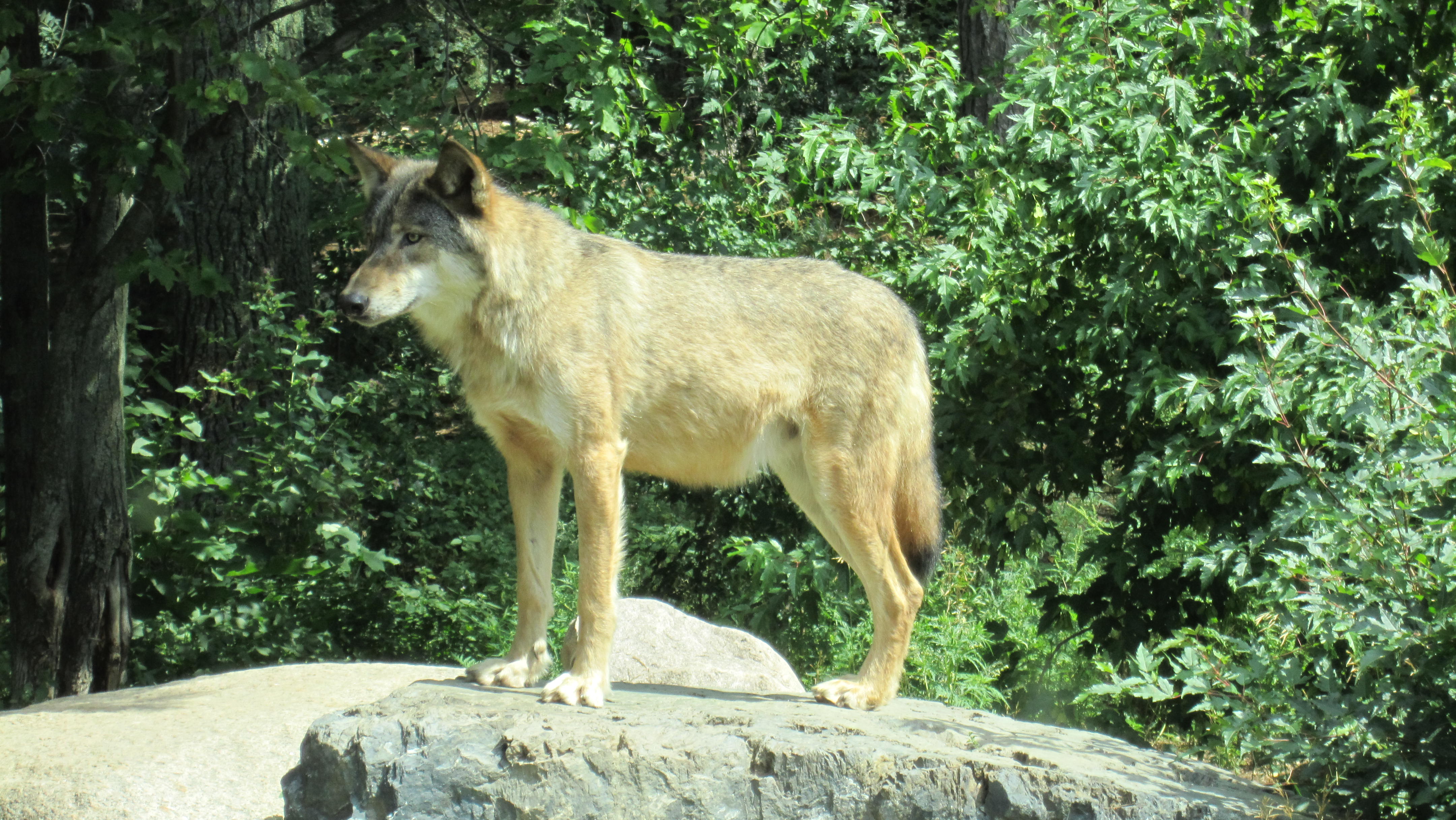 Welcome to WOLF NOTES, where interview questions stray from the rest of the pack. It’s nice to know the usual stuff like where an author gets their inspiration and why they write, but sometimes we need a little fun in our lives.
 Andrew McDowell wanted to be a writer since he was a teenager. He has studied History and English at St. Mary’s College, and Library and Information Science at the University of Maryland. He is a member of the Maryland Writers’ Association. He is an associate nonfiction editor with the literary journal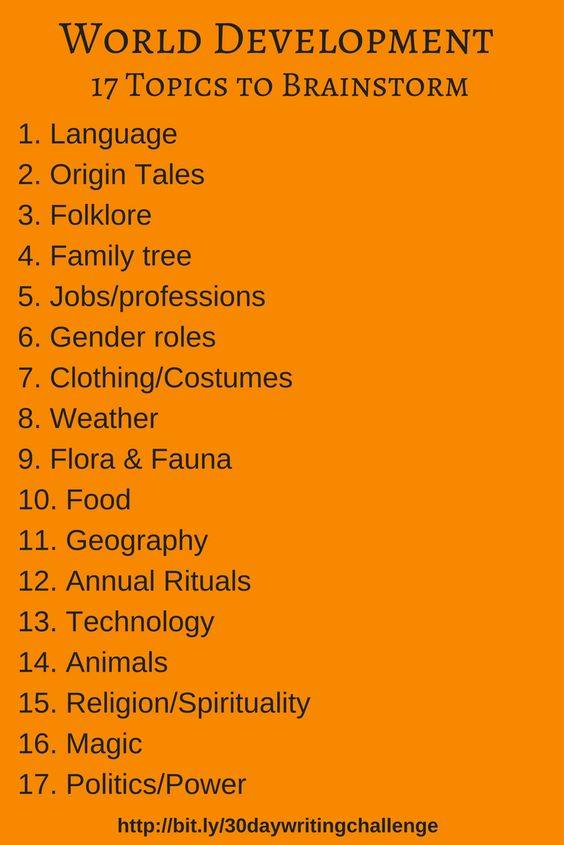
 Andrew McDowell