My very first guest appearance on an author’s blog! Many thanks to my friend and fellow writer Ari Meghlen for having given me this opportunity. For any of you who are writers looking for a place to be a guest blogger, I highly recommend her site.
Category: Editing
-
Count your Lucky Length
Often when works of fiction are discussed, word and/or page count comes up. When you see books on a shelf, one of the first things you’ll notice, apart from the author’s name and book title on the spine, is how thick or thin they are compared to each other. Some people, like J. R. R. Tolkien, enjoy reading long stories. Others prefer shorter works. What is it about length? Does it matter?
Often when you look at a book’s title page, there will often be a subtitle saying “A Novel” or something similar. “A Novella” and “A Novelette” appear to be less common. Instead, perhaps you might see “A Short Novel”. Furthermore, when it comes to defining types of writers we have novelist, poet, essayist, playwright, short story writer, and screenwriter. There are no set terms that I’m aware of for writers of novellas or novelettes. I sometimes feel novel is an umbrella term under which any fictional work longer than a short story can be labeled. Often, it seems word count is what it really comes down to, as I’ve seen so many sets of word count ranges that are used to define these works. Or is it?
In my senior year at St. Mary’s College, I took a high level creative writing class called “The Novella”. Some of the books we read felt like novels or long short stories. We each had to write a novella, and I started writing that story about neglected pets. It fit into a novella word count range. However, my classmates and the professor felt it should be expanded into a novel. I admit before that class, I’d first imagined it as a novel. Perhaps a work of fiction is what the author believes it to be, and subsequently calls it.
Writing for the stage and screen can be more restrictive, though it’s by page count rather than words. Once at a meeting of the MWA Annapolis chapter, it was stated a page of a screenplay equals a minute of screen time. Thus, an ideal film script should be 100-120 pages. A TV episode script would be 50-60 pages. Plays too it seems have page count limits these days. Audiences, I can understand, would rather not sit in a theater all day.
Some classic plays and films are long. Hamlet is usually abridged when staged or filmed. The 1996 unabridged film version lasted over four hours. Sometimes I wonder what Hamlet’s stage and screen history would’ve been like had Shakespeare written it as two plays, as he did with Henry IV (which has appeared onscreen only as TV films). I also wonder what the movie Gettysburg would’ve been like had it been a TV miniseries as initially planned.
Charles Dickens’s works were first published as a serial (like novelettes or novellas) before being printed as complete books. The serial versions were cheaper, making his novels available to the masses, whom, with a cliffhanger, would be enticed to buy the next installment. The novels of the Brontë sisters were published in “volumes,” but like Dickens’s books, they are only published as complete works nowadays. Some people feel novellas and novelettes have difficulty getting published these days, and if they do, they are usually combined with similar works.
In the end, it all comes down to the writer. It’s up to the author whether they want to define their work as novels, novellas, novelettes, short novels, or short stories. Length is applied in the public consciousness, but maybe it doesn’t have to. Does length and its description on the title page affect the customers decision to purchase or pass? What do you think?
Further Reading
- Meer, Syed Hunbbel. Differences Between a Short Story, Novelette, Novella, & a Novel.
- Playwriting 101. Chapter 1: The Play’s the Thing.
-
Another Year
Tomorrow marks this website’s second anniversary. Wow, two years already! Looking back, it’s amazing how much has happened since I created it, much of which I couldn’t have anticipated.
This blog post is my twenty-fourth. I chose to pace myself at one a month, which has suited me fine so I wouldn’t run out of ideas too fast. I’ve discussed personal insights and experiences in various aspects of the writing process as a means to get the word out about myself as a writer, to share my opinions, and to build a following in advance of getting my novel published. All are listed under the site’s Blog page.
My first blog post was referenced in a superbly done lecture series by Professor Jennifer Cognard-Black, titled Becoming a Great Essayist. I highly recommend it for any writer. My post may not have been an essay, and I certainly didn’t think of it as such when I wrote it. But maybe some of those that have followed it meet that level.
I completed writing Mystical Greenwood shortly after creating this site, and by the end of the following year, I signed a contract with Mockingbird Lane Press to publish it. The cover art was completed this summer, and my publisher and I have worked together on editing it.
Two haiku poems were published last winter in the MWA‘s literary journal Pen in Hand, which is available on Amazon (again, my author bio has an old web address). I’ve also done early work on two other novels, which I hope to get back to over the holidays.
My website has been viewed by people all over the globe. Ranked by most views, here’s a list of the top ten countries as of this moment:
- United States
- United Kingdom
- Canada
- India
- Brazil
- Australia
- Ireland
- Spain
- Tanzania
- Italy
I’ve shared my site and posts on social media, and made new accounts to increase the viewing pool. I’ve also uploaded two videos of me reading samples of my work publicly to my YouTube channel.
With Thanksgiving approaching, I’m thankful not only for getting my novel on its way to publication, but to have done well with this website over these two years. I’m also thankful to all of you who followed this site and liked my pages and posts.
Who can say what will happen in the upcoming year? With Mystical Greenwood coming closer to publication, I look forward to it! If you’re reading this and aren’t subscribed or following me on social media, I hope you’ll consider doing so and joining in on this journey!
If you have a website and/or blog, how long has yours been up? Please share some of your own writing and blogging highlights.
-
Edit, Revise, Rewrite
Any writer who takes their craft seriously will have edited their work many times over. I can pretty much guarantee that any bestselling novel or literary classic you take off the shelf is not in its first draft. Novels go through several drafts before they are published. It can be said of any form of creative writing too, really. It can even feel at times while you write that you are editing too, and the editing takes over the writing process. Some say to not edit at all with the first draft, to just write it and get it done. Also, others will say that you eventually have to stop editing and move on, otherwise you never will. Both of those sentiments make total sense, but editing is still a vital stage of the writing process.
Perhaps you remember from writing school papers the concept of rough drafts and final copies. Editing enables you to polish a rough draft so that you have a final copy. It is the same with novels. So what chance does a work have without being edited, or without at least one other pair of eyes not your own offering critical feedback? Taking feedback is never easy, but it should be constructive, so you can see it as a way to ask yourself what can be done better.
Going beyond grammar and spelling, the book itself goes through many drafts. Plot points are altered. New ones come in. Old ones are eliminated. It’s same with characters, names, and the elements and rules of world-building. Plot holes are identified, along with anything that does not fit. The problem is tackled, usually more than once. It might be necessary to start over from scratch, using the old draft for reference. Format can change too: chapter titles come and go, length can be altered, and the format of chapter numbers (word numbers, Roman numerals, number numbers) can change.
With Mystical Greenwood, I’ve learned the power and importance of editing. It’s always beneficial to have another pair of eyes look at what you wrote, so you might see what potential readers might say. Whether they’re beta readers, critique group members, or professional editors, their opinions will go a long way. At a time when I thought Mystical Greenwood was good and the plot solid, an insightful and encouraging critique from author John DeDakis showed me that more work still needed to be done. To quote Ewan McGregor’s character in The Ghost Writer, I came to think of it as a case where “all the words are there. They’re just in the wrong order.” Some scenes were moved around and rewoven together as a result.
Originally, I had around half as many chapters that were twice as long, but then I started to wonder if they were too long. I’ve read books with really long chapters and found it to be frustrating finding a place to stop before bed. So about two thirds through a draft, I split those I had in two (excepting the prologue). I also switched from word numbers to number numbers. I once had chapter titles, but grew to dislike them, and after failing to think of new ones, I discarded them altogether. I felt they had become unnecessary.
The main reason I approached Mockingbird Lane Press was its founder, Regina Riney-Williams, has a great reputation as an editor. Over the course of two rounds of editing, I have found her insights and opinions invaluable. She has been constructive and encouraging, and I’m very grateful for her feedback as much as her willingness to take my book on. I’ve learned not only that so much can change through editing, but as a writer to never stop with one draft. To be a good writer, one must seek and accept feedback, subsequently editing, revising, and often rewriting, which must continue with every novel to come.
-
The Four P’s of Getting Published
My uncle first came up with the concept of the P’s of getting published. He came up with three: patience, politeness, and professionalism. I added a fourth: persistence. One could call them principles, or perhaps even virtues (although that doesn’t begin with P). Each is important when corresponding with agents, editors, and publishers, and ultimately towards becoming published authors.
Patience
Everyone knows patience is a virtue. It’s also something I brought up when I discussed rejections and criticism. One writer is a fish in a deep ocean when it comes to editing and publishing. People in this industry have to judge every query and submission carefully, and with great thought. They have to decide whether or not it is an investment worth the risk, which like the publication process itself, takes time. Another saying people know is that good things come to those who wait. It’s especially true for writers. Believe me, I’ve learned the hard way never to rush when it comes to writing or getting published. It’s important to respect publishers and editors for taking quality time to be thorough in their jobs so that a writer’s work reaches its full potential.
Persistence
I already discussed the importance of persistence over a year ago when I talked about facing rejection and criticism. Writers have heard it said before and I’ll say it again: don’t give up. Now, once a contract has been signed, it isn’t a good idea to press agents, editors, or publishers, or sound pushy. Rather writers should be persistent to a degree that shows they care about their work and accomplishing goals, but are patient and respectful of those with whom they’re working.
Politeness
A writer must never forget once they have a contract that he or she is not the only writer under contract. Agents, editors, and publishers alike have to work with and help many writers. So writers should always respect their position and what they’re doing for them. They should respect what they say in their critiques, even if they the writer disagree with it. Now, being a little rude is one thing. But I recall one editor’s story of how a client went beyond being merely rude to being outright vile and foulmouthed, calling the editor offensive names. That editor wouldn’t work with that client again. Now this case, as I said, goes beyond mere rudeness. If writers are a little rude such as when defending their vision of their work, publishers and editors can handle that. Sometimes, people can be rude without realizing it. Still, it’s important to remember editors and publishers are people and have feelings, as do writers. Being polite and respectful goes a long way.
Professionalism
A writer should be professional in his or her correspondence, something that’s apparent from the beginning when querying and submitting work. No doubt everyone recalls dressing professional when going for a job interview. One certainly wouldn’t think of dressing too casual then or when hired. It’s a similar situation when approaching and communicating with those whose job is to edit, publish, and market writers’ creations. Only in this case it’ll usually take the form of words both written and spoken rather than clothing and hairstyle. Acting casually or even sarcastically can give the impression writers aren’t serious about their work being a success, that they don’t care. Publishing is a business. Writers must take it seriously as they would their work, so as to increase the likelihood of getting it and themselves out there.
-
Formatting a Manuscript
Writers can certainly have visions of how they want their books’ interior to look when readers open them, with such things as drop caps and fancy-looking fonts for the title and chapters and body. For those who self-publish, it’s certainly up to them what design they want. However, when submitting to agents and/or presses, they’ll rarely accept a manuscript that’s been elaborated as such. It needs to be easy for them to read and edit, similar to how play and film scripts must be easy for actors to read. Design for novels comes later. I’ve found it best to use a manuscript format while writing. It makes it a lot easier to focus on the story. A similar situation I think most people can relate to would be school papers; teachers and professors often give specific formatting guidelines to their students, based on their own preferences.
Agents and publishers will often have their own preferences that they specifically ask for or use later, but there are some commonalities I’ve found in advice and tips already out there, and from my own experience. What follows are some personal observations and recommendations based on some of these commonalities. Note: this discussion focuses specifically upon novels, as opposed to plays or screenplays (both of which I’ve learned have their own formatting guidelines) and using Microsoft Word.
Now, writers can go in manually and adjust, or modify text formats and headings so they can just be chosen. When it comes to the text, Left is preferred, rather than Justified, and no hyphenating (both will come later, with the final layout). Tabs aren’t recommended; instead, format paragraphs so the first line is always indented. The only paragraphs which don’t have to be indented are the first in each chapter. With titles and chapter headings, I’ve learned it’s best to Center and Bold them so they stand out. Italics are used only when there’s a specific need for them, such as for internal thoughts.
When it comes to font, a small handful are generally preferred: Times New Roman, Arial, Courier New, and probably Calibri and Cambria now. Make it all size 12 (except the book title if you wish). I also turn off the Widow/Orphan Control when setting the paragraph format. Why? Say there are one or two lines left on a page for a brand-new paragraph. It’ll automatically instead go over to the next page, and you have an empty line. Turning off the Widow/Orphan Control prevents that, so a page’s entire space is used. 1″ margins and regular paper size (8.5″ x 11″) are also preferred. Old school would have two spaces after every sentence, but nowadays it’s just one. Some would have the book title on the same page as the first chapter. In other cases, there’s a separate title page, which I personally prefer. I also make it a separate section from the chapters, so it doesn’t have page numbers like they do (which are typically centered in the footer).
In the end, I now think of manuscript formatting this way: it’s a book ready to receive edits as well as an elegant design, just as a play or script is ready to be read by actors. It’s beautiful in its own way, designed to be presented to the publishing world. If you have experiences and/or opinions of your own on formatting a manuscript, please feel free to share them.
Further Reading
- SMF – Standard Manuscript Formatting.
- Dacus, Kaye. Manuscript 101–Introduction & Basic Manuscript Format.
- Hill, Beth. Format Your Novel for Submission.
- Kewin, Simon. 16 Manuscript Format Guidelines.
- Klems, Brian A. What Are the Guidelines for Formatting a Manuscript?
- Williamson, Jill. How to Format a Fiction Manuscript.
-
Building Worlds
Writers create more than stories and characters. They create places, sometimes within the world of today or the past. There are also places, and whole worlds that never existed, except within the imagination.
I find the key to worldbuilding is how believable it feels. A good setting, however fantastical, must feel real to the writer and reader (with satire and comedy you can get away with this). A few times on the British sitcom Are You Being Served? when the characters would put on theatrical pageants, senior saleswoman Mrs. Slocombe was going to (or wanted to) play a character far younger than herself. Someone would remark that it was “make-believe” to which there were responses of “We’re going to have to stretch our imaginations” and (to Mrs. Slocombe’s chagrin) “Not to the point of incredibility.”
Many considerations are necessary. Every detail must harmonize with the story, style, and themes. Otherwise, that sense of reality will shatter. The reader will be left questioning why a certain little thing is the way it is rather than enjoying the story.

A contemporary setting, whether fictional or not, is usually pretty easy. With a historical backdrop, I recommend doing research into what life was like back then. Or perhaps the world is science-fiction, set several years in the future like Star Trek, or like Star Wars in a galaxy far, far away. There I suggest looking at the present, not just science and technology but the whole world. Imagine where it could all go in the future. Or it could be an alternate reality: what it would the world like had the past been different?
In fantasy, where the greatest amount of world-building undoubtedly occurs, I find it best to begin by looking at history, or even mythology. Suppose your world could have existed. Where and when would it be? Perhaps there’s more than one possibility. If so, perhaps you can merge them. J. R. R. Tolkien drew on myth, religion, and his own life experiences, from childhood and World War I, to create his stories.
Early on I envisioned my story as an epic adventure that would’ve taken place long, long ago. As a child I’d always been fascinated with knights. So I researched medieval life and society. However when it came to symbolism, names, and other details, initially I didn’t pay as much attention. It was a mix from various sources.
With new drafts of course came changes and the need to make everything fit together. As I mentioned before, I renamed characters, places, and things to strengthen my story’s feeling of “Gaelicness” which came out of a lifelong love for nature. I added details and symbols inspired by Ancient Celtic life and Irish myth. But I was careful not to take them too far, so they didn’t feel out of place with what I already had. I looked again to history and symbolism to help refine the “map” of my world. It is at present no longer a purely medieval setting but a mixture of different periods, which thereby makes it more its own unique world.
When it came to magic, rituals, and beliefs, I looked at myth and folklore, as well as numerous books and articles on Wicca, Neopaganism, Neo-Druidism, natural magic and spirituality. This research helped me reinforce the atmosphere I wanted. I’ve found that bridging ideas and sentiments from the modern world with ones from the old helps readers connect with themselves more.
When it came to the environment, I ultimately looked to the flora and fauna of Ireland and Britain. Brian Jacques, the late author of the Redwall saga, once said that he chose creatures native to his homeland for his anthropomorphic characters, rather than trying to use every animal in the zoo. I considered the latter once, until I realized many would never survive outside of a habitat not their own, and it would be too crowded. One or two exceptions won’t hurt. Still, they shouldn’t be too out of place. Herbs were researched for medicinal purposes. Some were later discarded as they were either not native to those lands or not found in a temperate climate. Many trees were chosen for being sacred to the Celts.
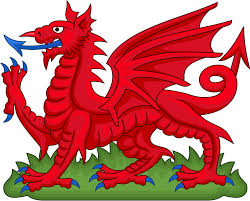
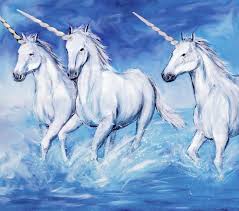
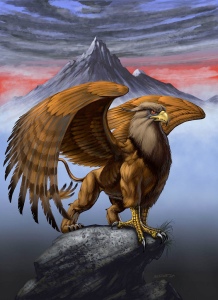
In addition to real creatures, I tried cramming in mythical ones too. Earlier drafts of my book included gryphons, unicorns, dragons, elves, dwarves and centaurs. The latter three were dropped as it again was a problem of overcrowding. With too many details, places and characters, a story becomes lost in itself. As a writer, you have to know when to stop.
If you write a series of books with an imaginary setting, I strongly advise you do NOT map out the entire world at the very beginning. Otherwise, you’ll be trapping your story (and yourself) in a box from which if you try to expand out of could lead to contradiction or dead ends. Without a complete box/map, you can add newer details with much more freedom. I found it very relieving, as I was able to concentrate more on my plot. Thus, the world and characters could grow in conjunction with it.
I will continue to build this fantasy world I’ve created as the trilogy progresses. Other, completely different worlds will no doubt follow with future projects. As in all aspects of writing, worldbuilding is undertaken with trial, error, patience, passion, and dedication. It is all part of a writer’s evolution.
-
What’s in a Name?
So asks the heroine of Romeo and Juliet. Her new boyfriend’s name is hated by her family, whose own name is hated by his in turn. Names are an integral part of our identity, which Juliet acknowledges. Their families’ names define the feud, while their individual names have become symbolic of tragic forbidden love. As a writer, I have come to believe choosing the right name for a fictional character, or even a place, thing or title, makes a big difference.
Initially I paid little attention to those I chose and/or created for my novel. One beta reader who read early drafts said there was a “Gaelicness” to my story, which was what I wanted. Soon after I looked at the names more closely and decided they didn’t reflect that feeling. With my characters, several felt too modern; a greater number didn’t feel like the kind I’d expect to find in a story set within an imaginary “Gaelic” world.
A few old ones have survived (and were moved around) as I felt they could still reflect that feeling. Nevertheless, most were changed. For my characters, the new names chosen were predominantly of Irish and Welsh origin, with a few Scottish and Celtic ones intermixed as well. At the same time, I wanted to make sure most would be easy to pronounce. Several of the ones I looked at I knew might be hard to say. So for some I went with the Anglicized spelling. And every once in a while there is a “modern” name which originates from ancient history or myth. Places and things were given names created using actual Gaelic words with specific meanings. Like the book title, I won’t reveal any just yet. I have learned when you change them on beta readers, it causes confusion. Once they grow accustomed to a name, it sticks. And they could still change.
Genre, I feel, is a key factor to consider. Some I feel are stricter than others. Fantasy can be, often depending on the setting. Science-fiction in contrast, especially if futuristic, is very liberating. Historical fiction is perhaps the strictest. I recommend making sure most names are at least semi-common, if not known, in the chosen time period. For instance, I would be cautious giving a character in an 18th century setting a first name that didn’t come into use until the 19th century. Some stories, like mine, have names meant to reflect a theme or another aspect about them. Comedy and satire are others, where you will sometimes find “silly” names. William Goldman used that word to describe some he chose for characters in The Princess Bride.
Don’t get me wrong. I’m not against using uncommon names, nor creating either new names or new variants of existing ones. I created such a variant for one of my novel’s characters. A few more may certainly follow in the sequels. Sir Walter Scott and Oscar Wilde respectively gave us Cedric (derived from the Anglo-Saxon name Cerdic) and Dorian (possibly taken from an ancient Greek tribe, the Dorians) in Ivanhoe and The Picture of Dorian Gray. All I will say is, depending on the story you’re writing, be careful not to overuse them.
Even my novel’s main mythical species has variant spellings: griffin, griffon, and gryphon. The first, undoubtedly the most common, is also a surname (perhaps the most famous literary example being the title character of H. G. Wells’s The Invisible Man) and occasional given name. The second is also used for certain dog breeds. I was introduced to the third in Alice’s Adventures in Wonderland. I chose that spelling because it not only seemed the most fantasy-like to me, but some feel it is the one to use when portraying this creature as noble and intelligent, much like the one in Lewis Carroll’s novel.
Often names come down to the characters themselves. Any combination of a number of factors can have an influence (or be influenced), such as ethnic background, religion, social status, family traditions, nicknames, or a change of name (if so, why?). Perhaps there’s something about their personality or appearance you want to reflect, or the opposite. Many comic book superheroes’ alter egos have names that sound common, meant to not draw attention. But some are unique too. Some could be inside references. The classic film Halloween contains several, to both people and places.
In his book Your Screenplay Sucks!: 100 Ways to Make It Great, William M. Akers offers some helpful tips which I find very helpful and can be applied to all forms of fiction writing. He recommends varying up the beginning letter, ending rhyme, and letter length to lessen the likelihood of confusion.
It all seems a lot, and certainly can run the risk of being overthought. All those factors previously mentioned do not have to have influence, nor need to. Not every fictional character, place, or thing even needs to be named. In the end, we all have different tastes. We writers must choose names because we want them. But remember, these fictional creations are our children, the children of our mind. Those of mine whom I name, I want names which suit them.
Here are links to some websites I refer to when searching for character names (some of them are interlinked):
First names
Last names
-
Prologues
The novel I’m trying to publish includes a prologue, which I recently read at an open mic. Prologues I’ve discovered are tricky. It would seem they are generally discouraged in publishing. However, I’ve seen books, including bestsellers, which have them. Even in movies you’ll find them. There are different kinds of prologues too. Lital Talmor has created lists of different categories, good and bad (see Further Reading below).
This particular prologue I have furiously tried to keep as many beta readers and fellow writers in critique groups (all of whom shall remain anonymous) gave their opinion of it and the rest of the manuscript. Why you might ask did I want to keep it so much? Was it even worth it?
I’ve learned if a prologue is going to be written, it must have a specific purpose. In order to draw readers in, the first few pages, with or without one, must hook them. If the prologue doesn’t do that, it ought to be discarded. At the beginning, what I wanted mine to do was show what is at the heart of the story, which is the beauty and importance of Nature. Throughout the manuscript and especially the prologue, when it came to Nature imagery, I got a bit poetic, which at the time was what I wanted.
One of my first beta readers liked it for the juxtaposition of Nature’s beauty with its destruction, which shows what is at stake. However, as I would later learn from other readers, that was not enough. In the earliest drafts of my novel, the entire prologue was a dream sequence. However, I soon learned that was a big no-no. Furthermore, it was, as Maeve Maddox (see Further Reading below) would point out, largely atmosphere. Lilley herself advises against such a prologue. Maddox says if your prologue feels “boring” then readers will want to go straight to Chapter 1. Those who read my earliest version felt it was too “detached” from the plot, and the style “wordy”. Clearly then if changes were not made it would have to go, or at least be broken up within the main plot somehow. Maddox herself offers that solution in the case of backstory.
So, in an attempt to keep my prologue, I made only the second half a dream sequence, with the protagonist describing it as he was looking back on past events. So I sort of made it a cross between what Talmor calls “background” prologue and a “future protagonist” one (the idea had come around because I have considered an epilogue at the end of the trilogy where he is a young man reflecting on the story’s events). I chose to withhold his name, hoping to make readers wonder who he was and want to read more to find out. Even then, critique group members still felt it was too detached from the story.
I found inspiration from the first Iron Man film. It has a “prologue” showing Tony Stark attacked and wounded, then after the movie title shifts back to 36 hours prior. So instead of having my protagonist years later, I had it set in the main plot, with Chapter 1 beginning some days before the prologue’s events and the early pages build up to that moment, which occurs before the first quarter mark. I added dialogue between the protagonist and another character, so it would not be mere atmosphere anymore, but still there are no names included. One beta reader who read this version liked it and described it as “intriguing”. While even acknowledging publishers do not always like prologues, she felt mine “worked”. So perhaps I am on the right track. I also believe that beginning with Chapter 1 as it is now, it would feel too sudden a start.
Some still thought it too wordy, and I have continued to try to find a balance. Recently, listening to myself reading it out loud helped me simplify it even more. In the end, I am reminded of my father’s advice: the important thing is to tell a story and tell it well. He has also told me less is more, especially with writing. In the end I have come to finally accept that I maybe I did get carried away with the “poetic” feel, and it certainly could get in the way of delivering the message and drawing in readers. So perhaps a poetic style was not the right fit for a young adult audience after all.
Will this prologue be discarded before publication? Will it become something different than it is now? I cannot say. I can say not every book I write will have a prologue, nor need one, but I’d like to try it a few more times, perhaps using Talmor’s categories. If the day comes that I try screenwriting, it will be the same. But I will make sure I want it in a story, and that it will serve a purpose, or I won’t have one at all.
Here’s my reading of my prologue:
Further Reading
- Maddox, Maeve. 3 Reasons to Ditch Your Novel’s Prologue.
- Talmor, Lital. Where to Begin? When, Where and How to Write a Prologue.